Lab-grown diamonds have captured more than half of global diamond jewellery sales by value. Mines are closing. Prices are collapsing. The natural diamond industry admits it misread the threat entirely.
Seven years ago, when the first lab-grown diamonds crept into engagement ring cases, the question was whether a diamond made in a reactor in Surat or Singapore was really a diamond at all. That question has been answered. According to Dr Ulrika D'Haenens-Johansson, senior manager of diamond research at the Gemological Institute of America, lab-grown stones now make up over half of global diamond jewellery sales by value and over half of diamond engagement rings sold by volume in the United States. Whatever the natural diamond industry once hoped, the lab- grown diamond is not a passing fad. It is the majority.
And yet the story of 2026 is not one of winner-takes-all. The lab-grown industry is struggling with its own success as prices slide downward toward commodity levels, while the mined diamond world is shrinking by choice, closing pits and cutting output to try to put a floor under prices. Both sides are asking the same question: once a diamond is simply a diamond, what makes anyone want to pay for this particular one over another?
With lab-grown diamond prices falling by the day, the answer involves three industry sectors. Top-end natural diamonds will remain a luxury, offering true scarcity and differentiated by the stamp of heritage jewellers. Lab-grown diamonds will provide transparency and create desire through design and innovative marketing, while vintage jewellery can quietly reap the rewards of ticking all the boxes.
The price of abundance
The economics of a manufactured product are unforgiving. Once the science was perfected, costs fell and kept falling. De Beers' Lightbox strategy, offering lab-grown fashion diamond jewellery below cost to price out pioneers, was itself a flag. Those were the days when a quality 1-carat mined diamond sat around the £10,000 mark and a lab-grown sold for about 25% less.
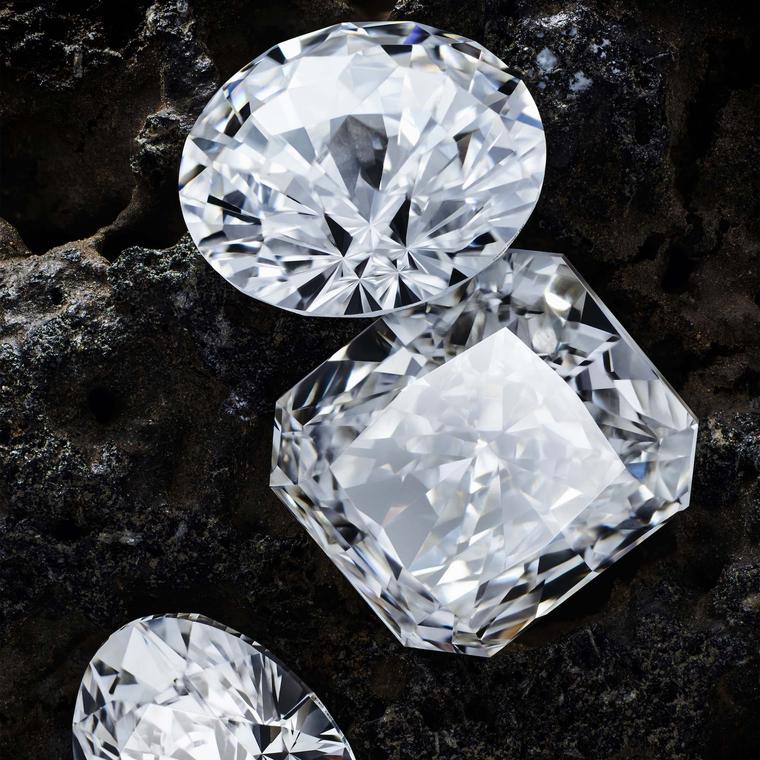
At the time of writing, a 1-carat, lab-grown E colour/VVS diamond retails approximately between £800-£2,000 ($1,00-$2,500) while an equivalent mined stone sells for £4,500-£8,500 ($5,700-$10,800), making the lab-grown roughly 80% cheaper than its mined equivalent.
Dr D'Haenens-Johansson notes that some 95 per cent of lab- grown diamonds now sit within the narrow D to F colour and flawless to VVS2 clarity bands, which is to say that the grading vocabulary developed by GIA in the 1940s to describe the rarity of a mine's output no longer means much when every stone comes out near perfect. The premium goods are the only goods.
Marty Hurwitz, executive director of the Grown Diamond Trade Organization, is unconcerned by the falling prices that so alarm parts of the trade. Declining costs are normal for a technology product, he argues, and the relevant questions are whether consumers keep buying, whether retailers can sell profitably and whether anyone can build value beyond the stone itself. "The strongest companies will not depend indefinitely on earning extraordinary margins from a loose stone," he told JCK.
His prediction for the future is blunt: lab-grown will account for the overwhelming majority of diamond jewellery units, while natural diamonds become a smaller, more premium and increasingly branded luxury category. And it's a global phenomenon: Regal Jewellers of Hatton Gardens in London reports that 70% of its engagement rings are lab-grown.
Find out more about how lab-grown diamonds are made
What surprised Hurwitz most since GDTO's founding in 2024 is what consumers do not care about. The organisation launched believing shoppers would value sustainability ratings and production data. They did not. Buyers care about design, appearance, quality and price, in roughly that order, and sustainability at best strengthens a decision already made. It is a sobering finding for a category that spent years marketing itself on ethics.
The mines shrink back
If the lab-grown trade is learning to live with abundance, the miners are choosing scarcity. JCK's mid-year mining roundup reads like a casualty list. Rio Tinto's Diavik mine in Canada's Northwest Territories delivered its final production in March after 23 years and more than 150 million carats. Its neighbour Ekati filed for insolvency in the spring. Alrosa, the world's largest producer by volume, lost around $129 million in the first half of the year, and its chief executive Pavel Marinychev told Vladimir Putin the industry is in the deepest sectoral crisis in its history. Botswana, where diamonds account for roughly a third of national revenue, saw diamond export earnings fall by almost 30 per cent in the first five months of 2026, although Debswana plans to lift output modestly this year from 15 million carats to around 18 million, still far short of the 24 million it produced before the downturn.
The discipline appears to be working, at least at the margins. Diamond analyst Paul Zimnisky observes that supply cuts are putting a floor under rough prices, and Rapaport's polished index in July posted flat or positive numbers across all four major size categories for the first time since March 2025, with the one-carat index ending 13 straight months of decline. Zimnisky warns that if the cutbacks continue, the excess inventory currently cushioning retailers could give way to shortages in 2027 and 2028.
The most telling numbers come from the market's top and bottom. At Letšeng in Lesotho, the highest value per carat mine in the world, Gem Diamonds recovered 12 per cent fewer stones in the first half of the year but saw revenue rise by a third, with eight stones selling for more than $1 million each and a 346.99-carat white found in June. Meanwhile at Gahcho Kué, Canada's last producing diamond mine, average values halved to $34 a carat as the pit yielded a higher proportion of small goods. Big, rare, beautiful diamonds are holding their value. Ordinary ones are not. This is the shape of the natural diamond's future: a luxury category, not a commodity.
The latest move from the mined diamond industry was to get support from The World Jewellery Federation (CIBJO) to move from the 'lab-grown' classification to 'synthetic' for diamonds, an attempt to further distance the two products.
What only nature can do
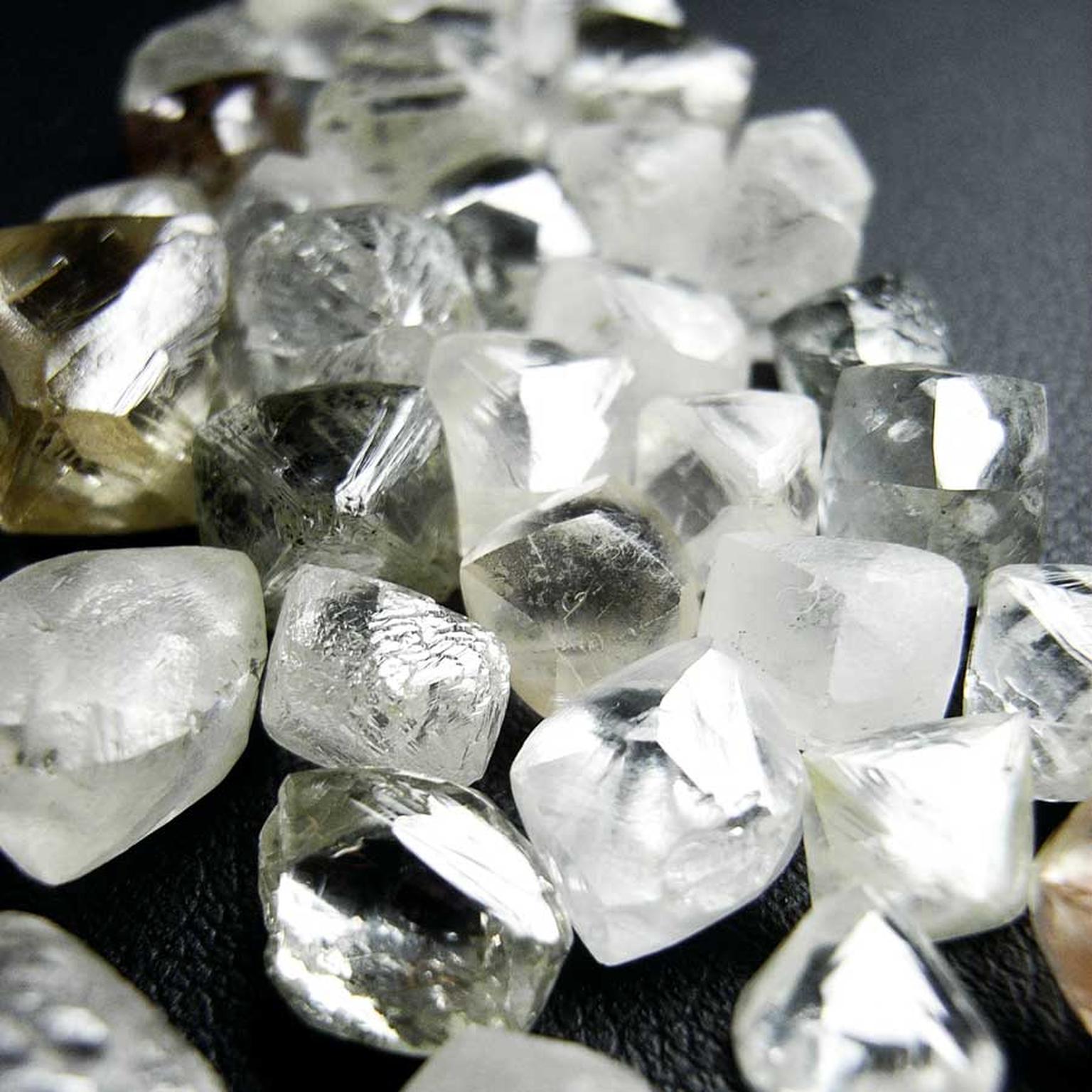
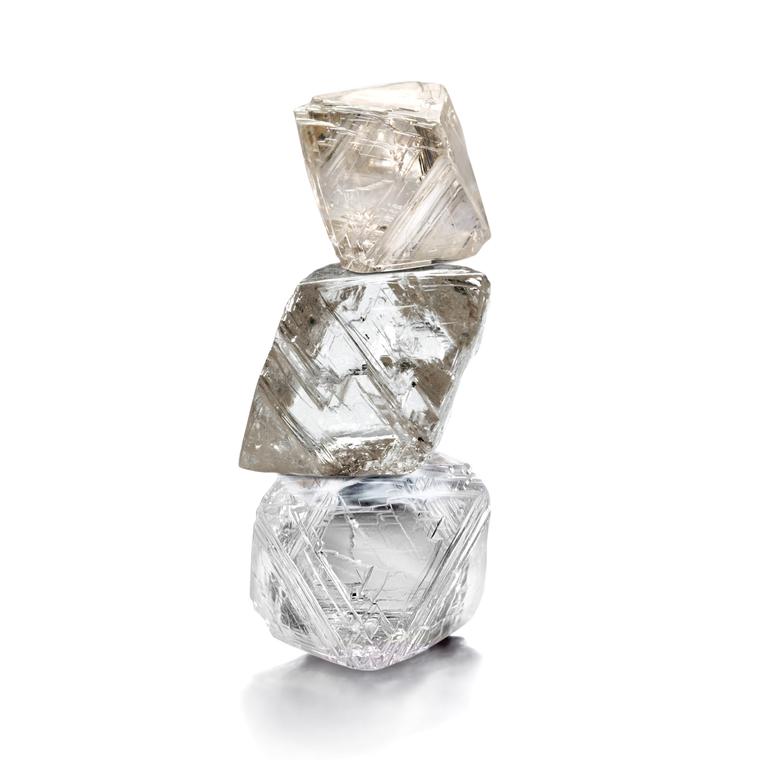
Which brings us to the question of how, exactly, can a natural diamond sell? Dr D'Haenens-Johansson's answer is time and depth. Natural diamonds formed between 90 million and 3.5 billion years ago, most at around 200 kilometres below the surface, and were carried up in volcanic eruptions that would have destroyed almost any other material. To find a single one-carat D flawless stone, she calculates, one must extract on average 100,000 tonnes of ore. Under deep ultraviolet light, natural diamonds reveal growth patterns like the rings of a tree, a fingerprint no treatment can erase.
She is also candid about where the differences show with the naked eye. Fancy coloured lab- grown diamonds, and treated pinks in particular, derive their colour from a narrow set of defects that produce a hue subtly unlike that of natural stones. "Your eye can tell those differences in hue," she says. It reminds us that, for all the talk of chemical and optical identity, the two products are not interchangeable in every respect.
Hurwitz, from the other side of the divide, makes a related point that the natural diamond industry has yet to answer. A consumer can recognise a Rolex or a Chanel bag across a room. Nobody can tell a natural diamond from a lab- grown one without a laboratory. If the mined stone is to command a lasting premium, he argues, it needs a visible signal, whether a mark on the table, a branded element in the setting or a hallmark, so that its origin can be seen rather than merely certified. Attacking lab- grown diamonds as factory imitations, he adds, risks sounding defensive to the millions of people who knowingly bought and enjoy them. "A Mercedes does not need to claim that a Toyota is not a car."
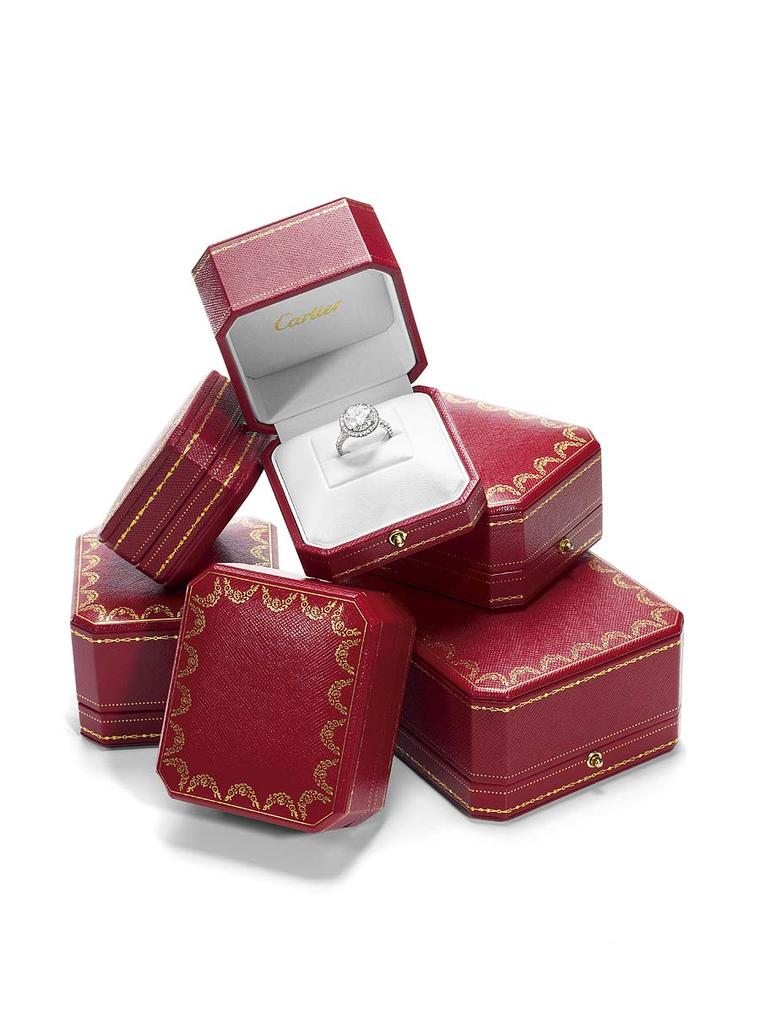
This is where the power of brand recognition from dominant jewellery houses such as Cartier, Van Cleef & Arpels and Tiffany comes into its own. By refusing to use lab-grown diamonds, a clearly branded solitaire engagement ring becomes more desirable, serving as an unequivocal signal of a natural, mined diamond and differentiating itself from the rising tide of affordable, generic jewels.
Selling desire, not carats
Both sides face challenges, and the more thoughtful lab-grown houses know it. Aurelia, a new Miami-based fine jewellery house founded by Vitaliya Alkhovik that launches its first collection in Venice in September 2026 during the film festival, argues that the first generation of lab- grown brands had to prove the product was real, while the next must prove it can be desired.
Accessibility can create a market, the house says, but it cannot create a maison. "Modern luxury does not need a perfect story. It needs an honest one," says Alkhovik, whose ambition is to give lab-grown diamonds a language of their own rather than a cheaper imitation of the old diamond dream.
Crucially, these companies are targeting a customer the whole industry is failing to reach: the young buyer who is not walking into jewellery shops at all.The commercial evidence that this can work is beginning to accumulate. Astrea London, the British lab-grown house with Sarah Jessica Parker as global creative director, reports that sales doubled to £1.5 million in the first half of 2026 and expects to more than double full-year revenues after passing £1 million in 2025. Its French Riviera necklace, set with 326 carats of lab- grown diamonds and valued at around £240,000, is the kind of piece that would once have been unthinkable outside the great Place Vendôme houses. Astrea also has men in its sights, with a new collection, fronted by the England rugby player Maro Itoje.
The third way
A quieter beneficiary of all this upheaval. Nick Withington, chief executive of the British jeweller William May, reports a rise in demand for vintage jewellery, with Google searches for the category up tenfold year on year and jewellery accounting for 83 per cent of second-hand luxury sales worldwide last year. "Vintage ring sales are especially popular because they offer incredible craftsmanship, distinct character, and an eco-friendly alternative to newly mined gems," he says. Buyers, he adds, appreciate the long-term value retention relative to mass-produced modern pieces.
It is not hard to see why. An Art Deco ring answers every question the diamond debate raises: the diamond is natural and old, the craftsmanship is of a standard rarely matched today, no new ore was dug to make it, and it comes with a story that neither a reactor nor a certificate can supply. For a certain kind of buyer, the choice is no longer natural or lab-grown, it is vintage or antique.
How to buy a vintage engagement ring
What it means for you
So where does this leave the person standing at the counter? Some plain conclusions can be drawn. If you want the largest, brightest stone your money will buy and have no expectation of resale value, the lab- grown diamond is now the rational choice and, with prices still falling, there is no reason to hurry. If you are buying a natural diamond, buy it for the reasons only nature can supply: size, rarity, exceptional colour or provenance, and preferably with a documented origin, because the middle of the market, the ordinary one-carat near colourless stone, is where the two categories collide and where the natural premium is hardest to justify. And if you want beauty, sustainability and value in one object, look to antique before you consider new.
The material no longer confers meaning. It must be earned: by the miner, grower, designer, and the house whose name is on the box. That, in the end, is good news for jewellery as it will foster transparency, creativity and a new sector targeting audiences who would never have considered buying diamonds on such a scale.
Sources: JCK (interviews with Marty Hurwitz, GDTO, 14 August 2026; diamond mining roundup by Sam Cooley, 17 August 2026; GIA webinar report by Victoria Gomelsky, 27 August 2026); William May guide to vintage jewellery, August 2026; Astrea London and Aurelia press material.