At GemGenève 2026, the Jewellery and Gemstone Association of Africa (JGAA) unveiled the winners of its Design Dynamic Competition, an initiative inviting designers from across Africa and the African diaspora to reinterpret the future of jewellery through the lens of birdlife, movement, colour and symbolism. The presentation formed part of GemGenève's 10th anniversary edition, a milestone year for the Geneva fair that has become one of the jewellery industry's most important platforms for designers, dealers, gem specialists and cultural initiatives from around the world.
The winning projects offered a fascinating glimpse into the diversity of contemporary African jewellery design. Selected across three categories — Computer Assisted Design (CAD), Celebrating the Art of Gouache and Hand Rendered Design — the concepts drew inspiration from some of Africa's most remarkable bird species, resulting in designs rich in narrative, cultural meaning and technical creativity.
Founded in 2024 by Longo Mulaisho-Zinsner, the Jewellery and Gemstone Association of Africa was established to support the growth, visibility and professional development of Africa's jewellery and gemstone sector. Design Dynamic builds on that mission by creating opportunities for emerging and established designers to present their work on an international stage while celebrating African creativity through contemporary design.
For Mulaisho-Zinsner, Design Dynamic is as much about visibility as it is about artistry. “Our vision is to see a truly dynamic African jewellery and gemstone industry — one that reflects the diversity, creativity and brilliance already alive within it,” she says. “Each open call reveals new voices and new ways of seeing Africa through design.”
Computer Assisted Design: movement, colour and memory
The CAD category demonstrated how digital design tools can translate the natural world into ambitious contemporary jewellery concepts.
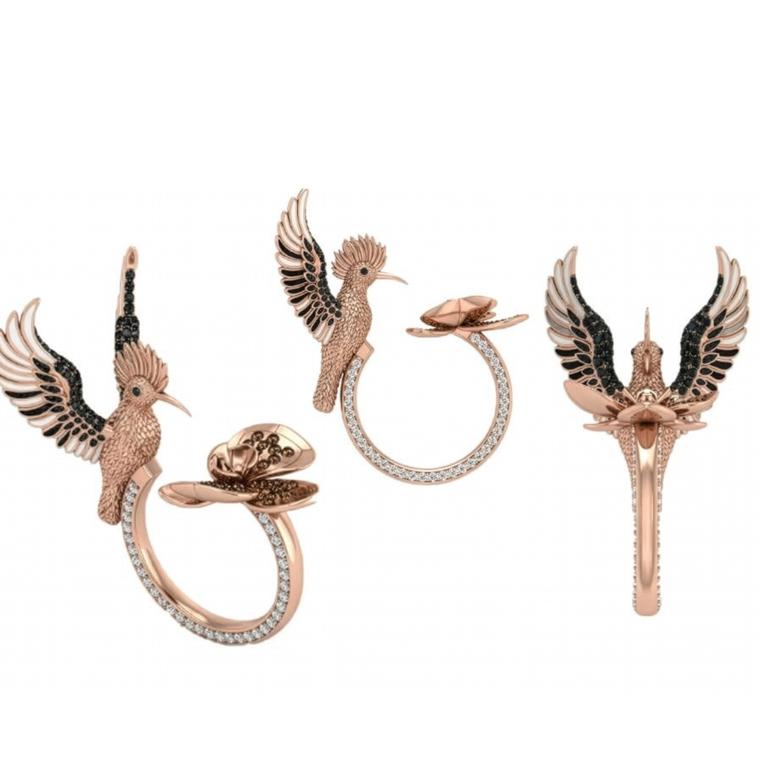
The first winning design came from Nomonde Zwane, a freelance jewellery designer from Eswatini, the small southern African kingdom nestled between South Africa and Mozambique. Her inspiration was the Hoopoe, known locally as uMzolozolo, a bird instantly recognisable by its fan-shaped crest and long curved beak. While the species is often associated with wisdom and communication in folklore, Zwane's interpretation was deeply personal. Inspired by memories of her late grandparents and the recurring appearance of Hoopoes outside the family home, she developed a design that speaks of ancestry, memory and spiritual connection.
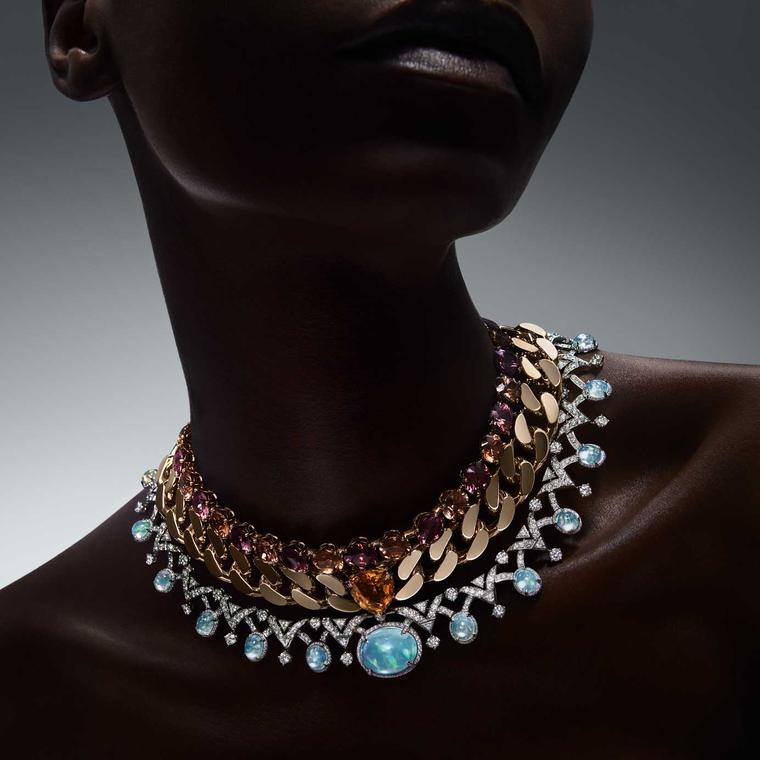
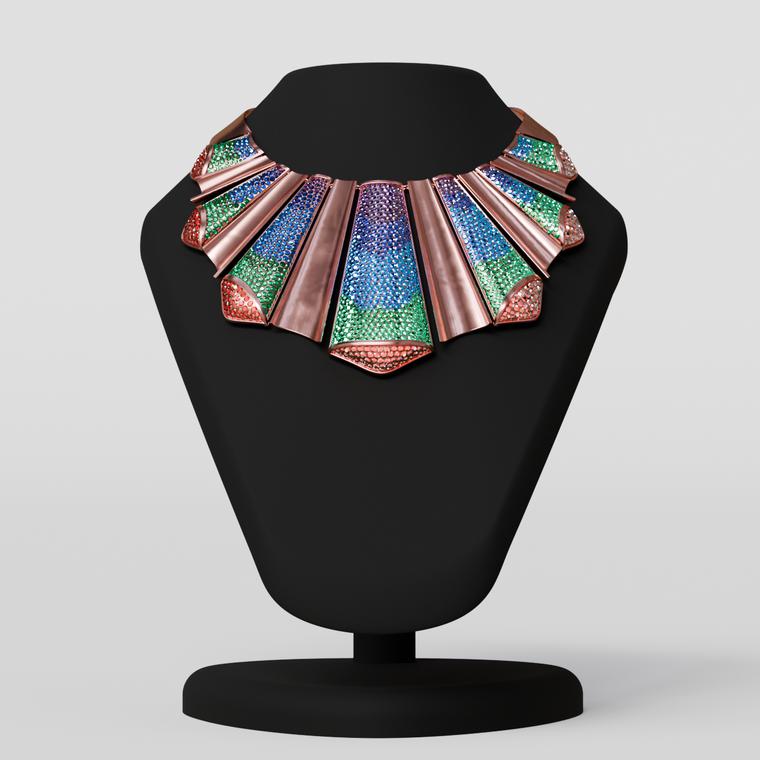
The second CAD winner highlights the international reach of the competition. Brazilian designer Eduardo Moreno Nery Vieira participated as part of the African diaspora, a theme that sits at the heart of his work. Brazil is home to one of the largest African diaspora communities in the world, and Eduardo describes African influence as deeply embedded in Brazilian culture, from music and spirituality to craftsmanship and aesthetics. His inspiration came from the Purple-crested Turaco, a spectacular bird native to eastern and southern Africa known for its iridescent green plumage, vivid purple crest and flashes of crimson revealed only in flight. Eduardo translated these dramatic colour shifts into a sculptural necklace concept composed of articulated forms that evoke unfolding wings, capturing both movement and chromatic intensity.
Celebrating the Art of Gouache: painting nature in colour
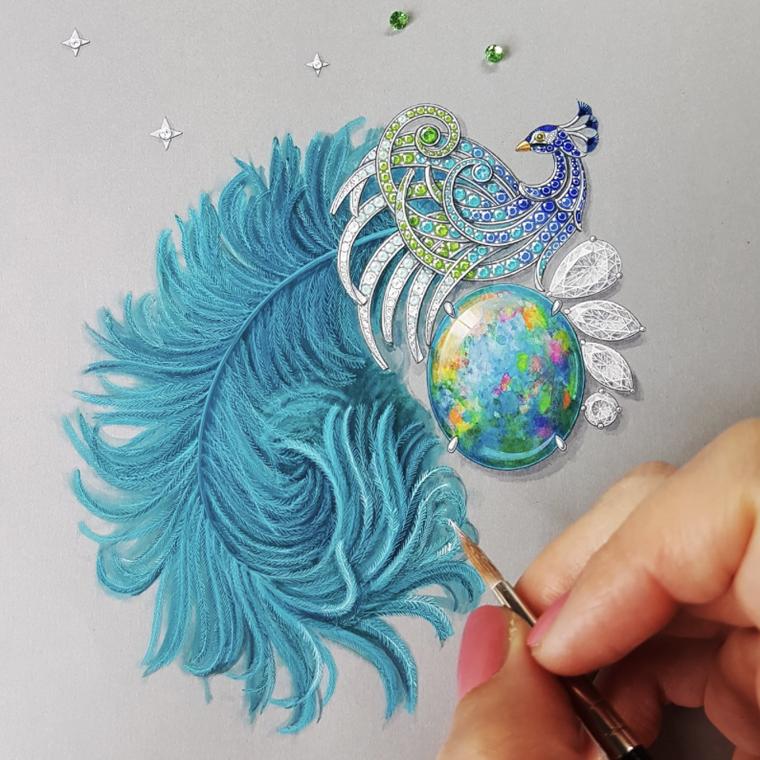
One of the most distinctive aspects of Design Dynamic was its decision to celebrate gouache, the traditional medium that has long served as the visual language of jewellery design.
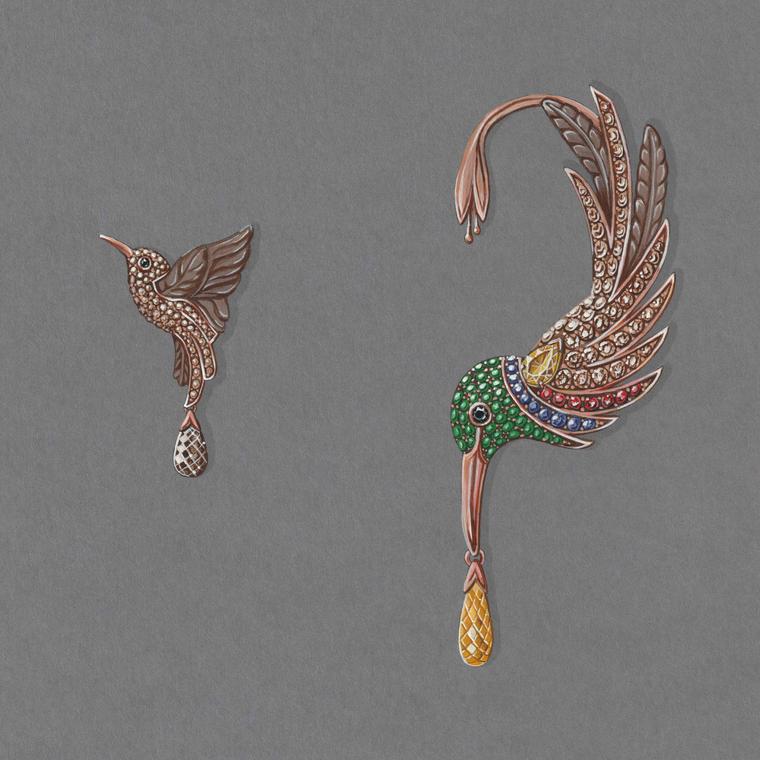
South African jewellery and watch designer Cathy Lennox found inspiration in the Southern Double-Collared Sunbird, a tiny nectar-feeding bird found across southern Africa whose metallic plumage shimmers with brilliant shades of green, blue and red. Her winning concept comprises asymmetrical designs representing both the vividly coloured male and his more understated female counterpart. Together, they celebrate partnership and balance, while a citrine drop references the nectar-rich flowers that sustain these energetic birds.
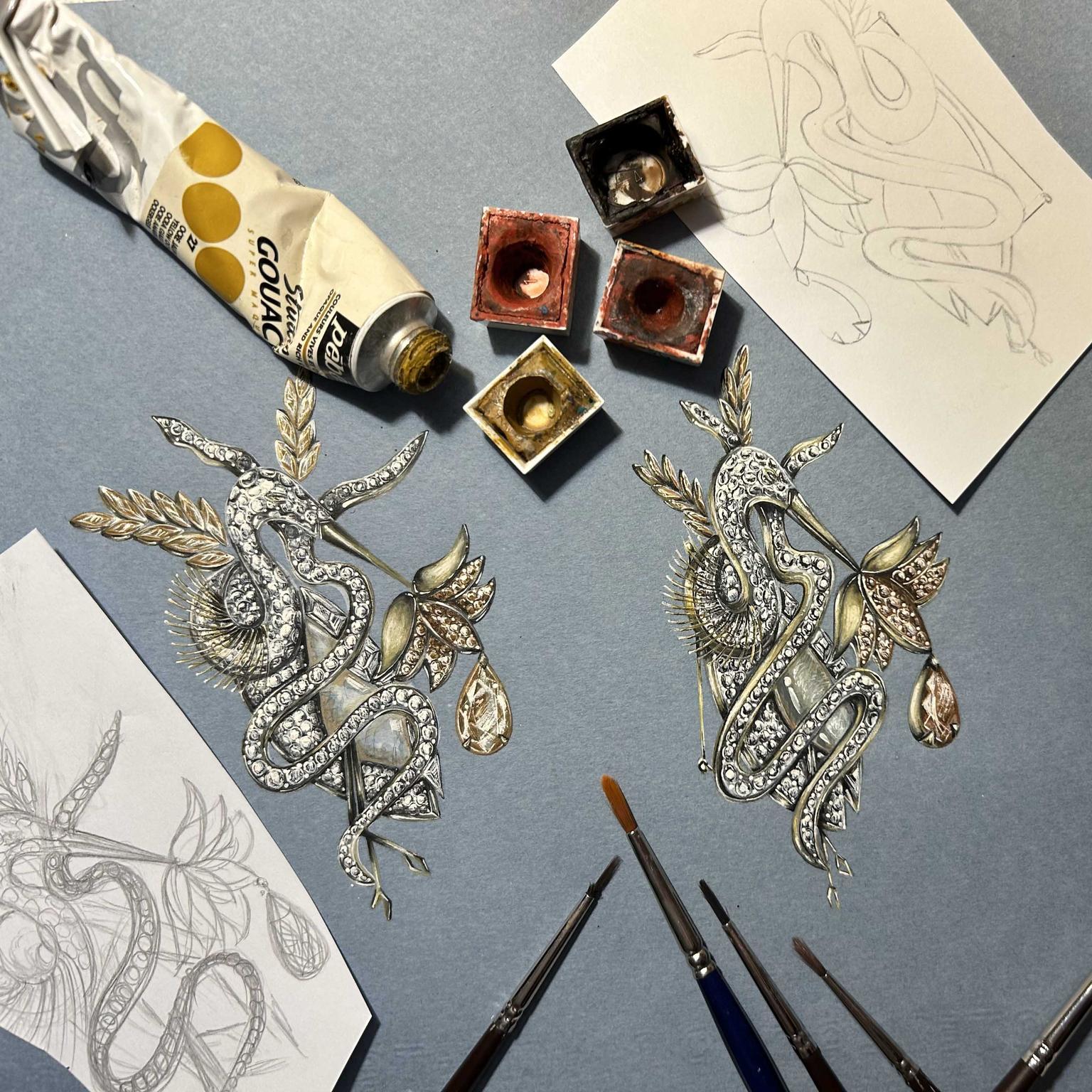
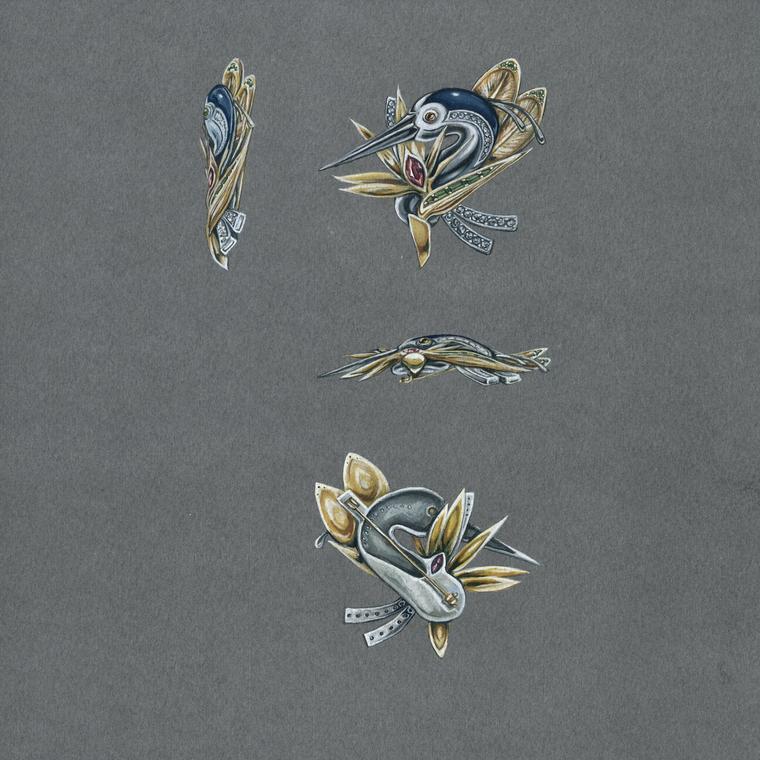
Fellow South African designer and fine artist Jana Lützeler drew inspiration from the Grey Heron, a tall wading bird distinguished by its elegant silhouette and graceful movements. Raised within the unique environment of the Cape Floral Kingdom, one of the world's richest biodiversity hotspots, Lützeler paired the heron with a strelitzia flower to explore the visual dialogue between birdlife and flora. The result is a composition that celebrates South Africa's extraordinary natural heritage.
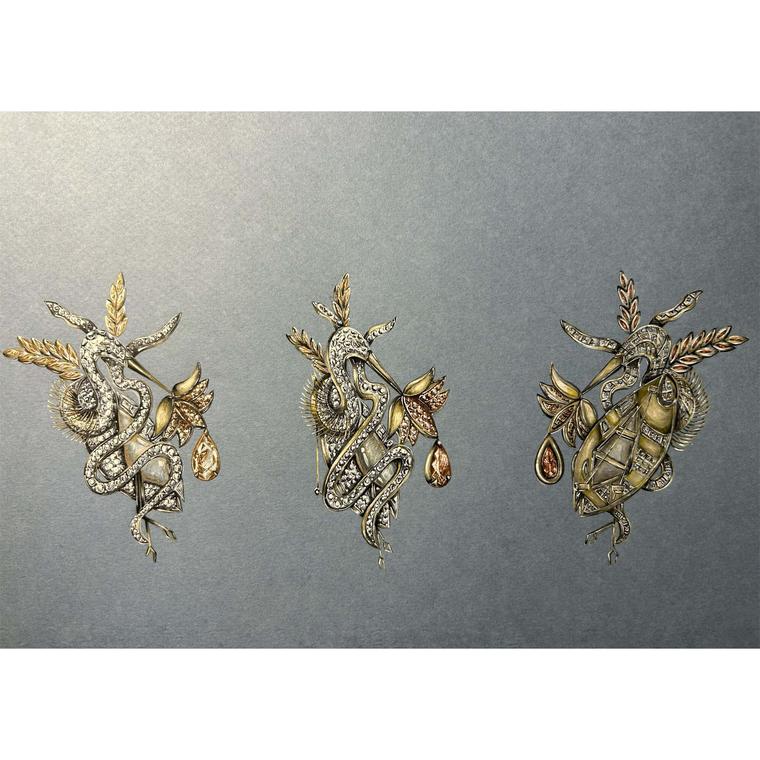
Egyptian jewellery designer and gouache specialist Nada Basta also chose the Grey Heron, but through a distinctly Egyptian lens. Her design, titled Grey Heron – The Guardian of the Nile, reflects the bird's presence along the Nile River in the historic cities of Luxor and Aswan in southern Egypt. By incorporating materials associated with Upper Egypt, including carnelian, quartz and moonstone, Basta connects birdlife, landscape and cultural heritage while celebrating one of Africa's most enduring waterways.
Hand Rendered Design: stories of resilience and freedom
The Hand Rendered Design category highlighted the enduring power of drawing as a tool for storytelling.
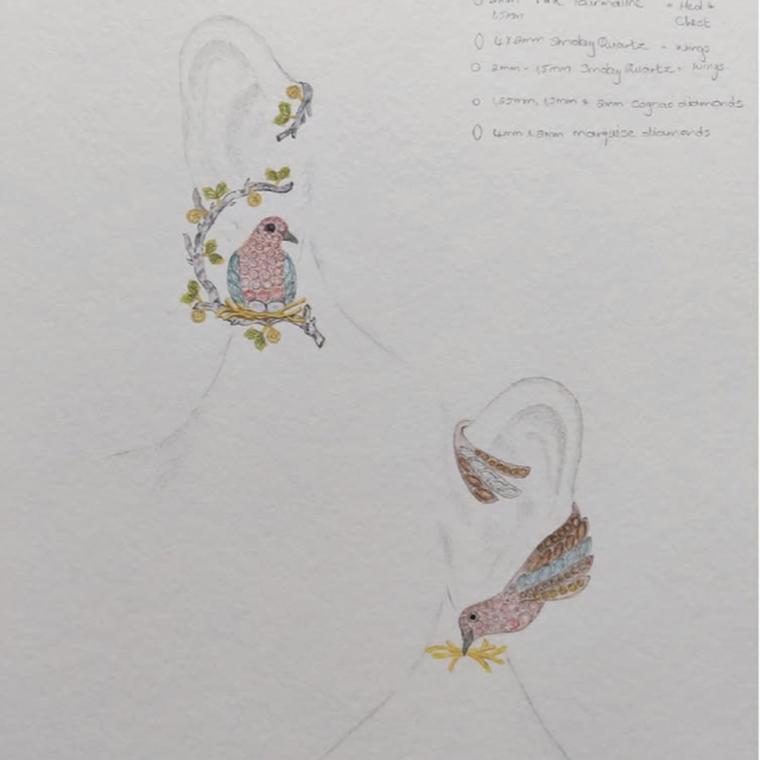
Award-winning South African designer and gemmologist Lenate de Villiers looked to the Laughing Dove, a familiar bird across southern Africa known for its soft pink-grey plumage and gentle, rhythmic cooing call. Inspired by memories of the Karoo, South Africa's vast semi-desert interior, she developed a design for asymmetrical earrings depicting one dove at rest and another in flight. Through the bird's enduring pair bonds and quiet resilience, De Villiers explores themes of partnership, Ubuntu and hope.
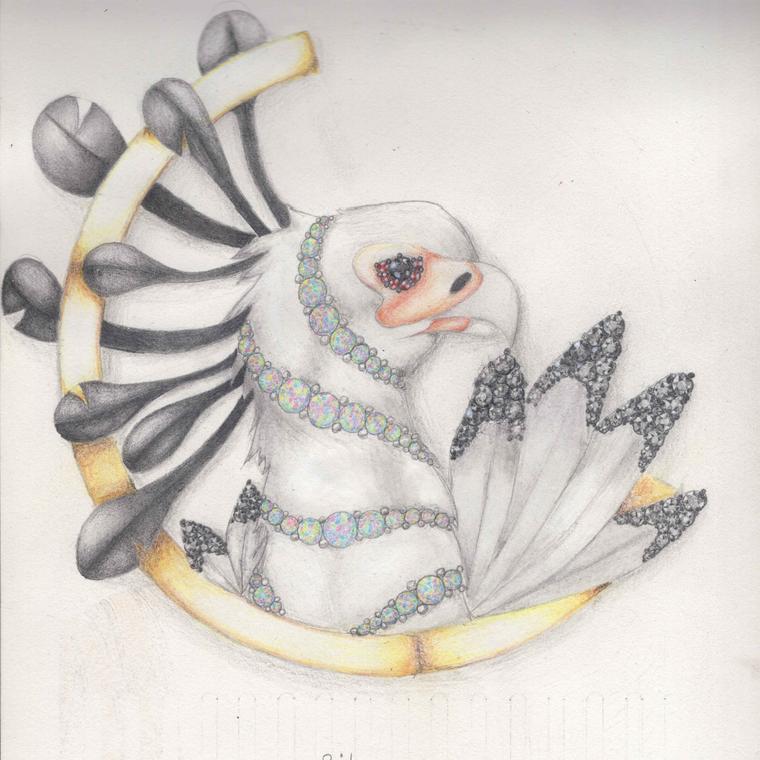
The second winner, nineteen-year-old South African designer Marna Potgieter, chose one of Africa's most iconic birds: the Secretary Bird. Famous for its long legs, dramatic crest feathers and ability to hunt snakes, the bird has become a symbol of strength and fearlessness across the continent. Potgieter translated these qualities into a bold design centred around an incomplete golden circle that symbolises freedom and movement. Combining opals, black onyx, buffalo horn and precious metals, the concept captures both the elegance and power of this remarkable bird of prey.
Taken together, the winning designs reveal the extraordinary breadth of talent emerging from Africa and its diaspora. While united by a common theme, each designer approached the brief from a unique perspective, drawing on personal histories, cultural traditions, local ecosystems and individual creative voices.
Yet the story does not end in Geneva. The projects presented at GemGenève represent the first stage of a longer journey. Supported by JGAA's growing network of sponsors and partners, including Moyo by Piat and Maison Piat, whose gemstones will be incorporated into some of the creations, the winning concepts are now moving into production.
The renderings, illustrations and technical designs showcased during GemGenève's 10th anniversary edition were never intended as an end point. The next chapter of Design Dynamic will see these ideas transformed into finished jewels, bringing together designers, gemstone partners and manufacturers to realise the winning visions. If Geneva offered a glimpse of the future of African jewellery design, the completed creations will reveal how those ideas translate from paper and screen into reality — and how JGAA's ambition to bring African talent to a global audience continues to take shape.