New York-born Ryan Bernell (below) is on a mission to revolutionise men’s jewellery by establishing a new category of high-end pieces worthy of history’s greatest names. Now based in London, Bernell has assembled master craftspeople to realise his distinctive and ambitious vision.
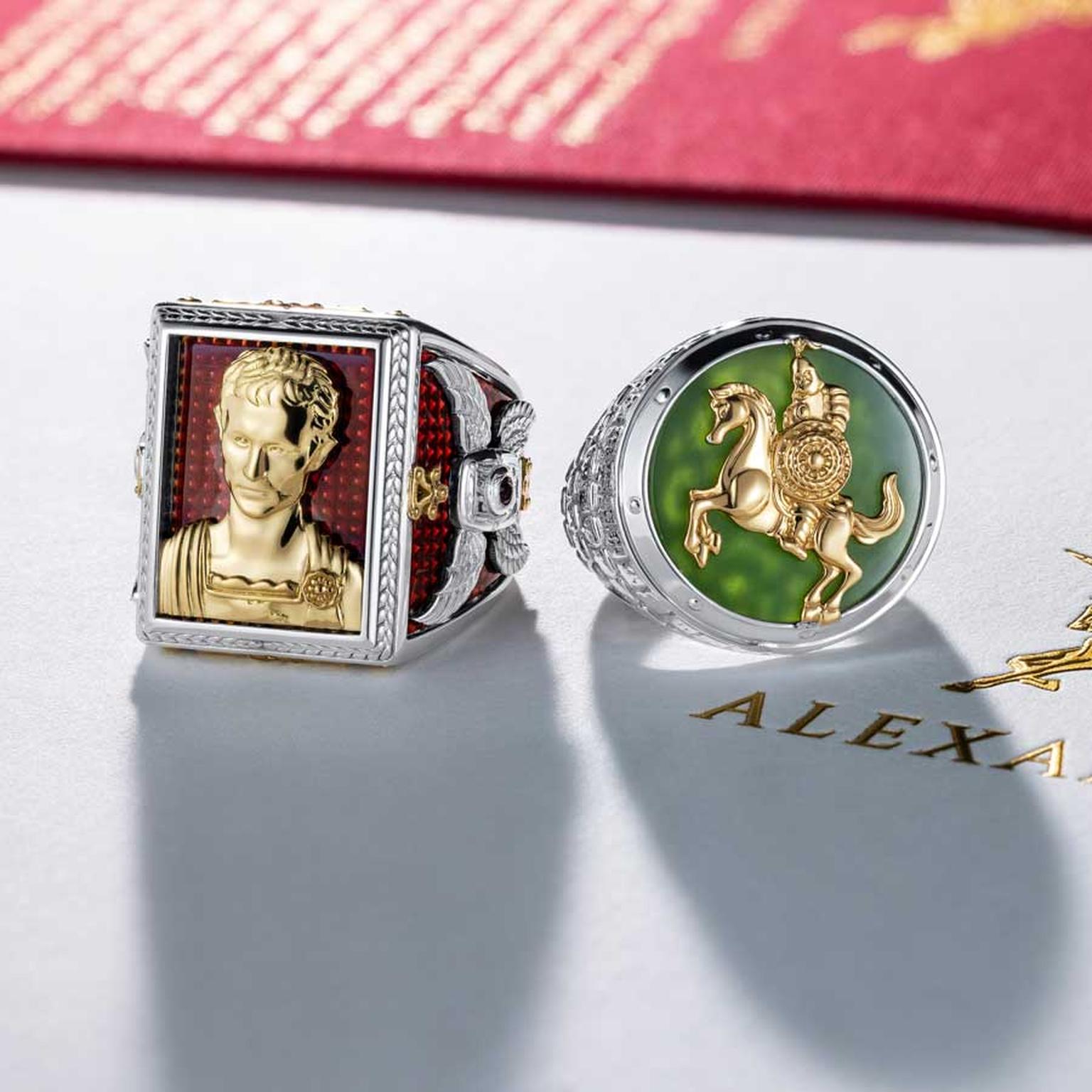
Since its founding in November 2025, Alexandria has produced three designs featuring Genghis Khan, Alexander the Great, and Julius Caesar, each rich in historically accurate details and made in the UK to Bernell’s exacting standards.
TJE: What was the inspiration behind Alexandria?
RB: It was literally born from the frustration at not finding any jewellery that I loved.
I had started a men's fashion consulting business ten years ago, and I felt like I had developed an eye for detail and a taste for beauty. Since then, I’ve been looking for men’s rings that I love, but there haven't been any good options that are masculine and bold, but also beautiful, elegant, and comfortable for daily wear.
I was certain I wanted something unmistakably masculine—a statement piece that was well-crafted—which led me to found Alexandria. I began creating the pieces I had long sought but never found.
TJE: Tell me about your artistic background?
RB: I come from a musical family, and I grew up playing drums and guitar. Apparently, I played the guitar for my guests at my third birthday party. In my teens, I began to get into jazz, inspired by a family friend who was a jazz pianist, and I attended a music and dance high school, where I could further develop my love of music. I was heading for a career as a professional jazz drummer.
Jazz is a wonderful art form that’s becoming extinct, which I liken to the jewellery-making techniques that we employ. Like jazz, they are incredibly difficult to master, and there's a similar artistry and creativity in jazz musicianship. It’s about the subtleness of the blends and how crucial it is that every component is precise and measured and contributes to a perfect yet complex whole that appears effortless, which makes me think that the likeness between the two drew me to jewellery.
TJE: What makes Alexandria’s jewels unique?
RB: Quite simply, I don't think there’s anyone out there doing what we're doing in the realm of men’s jewellery. I challenge myself to make the best possible men's jewellery in the world.
I am partly inspired by the Super Bowl rings the football players wear, as they are distinctly male and bold, but I wanted to refine and elevate the concept.
From the start, I was very clear that I wanted a very specific look and very precise designs, so I sought out the best in each field, from designers to master craftspeople. It took me longer than expected to find the right people, but it was worth the time and effort.
And then obviously the historical element, which is really at the heart of the brand. As a teenager, to boost my confidence, a friend recommended that I read biographies of great men throughout history. The first one I picked up was the biography of Alexander the Great, which blew me away as it was 300 pages of a man simply conquering everything in his path, which at that age left a huge impression on me. I went on to read about Julius Caesar and other great men in history, and was introduced to these larger-than-life figures who became the initial inspiration for my jewellery brand.
I am doing my best to honour the great empires and men of the past, and when looking at a jewel, I ask myself, ‘Would Alexander the Great wear this? Is it worthy of a monarch, an empire builder, a man who changed the world?’ This is how history and craftsmanship come together in my jewels.
TJE: How does the historical element come through in your jewels?
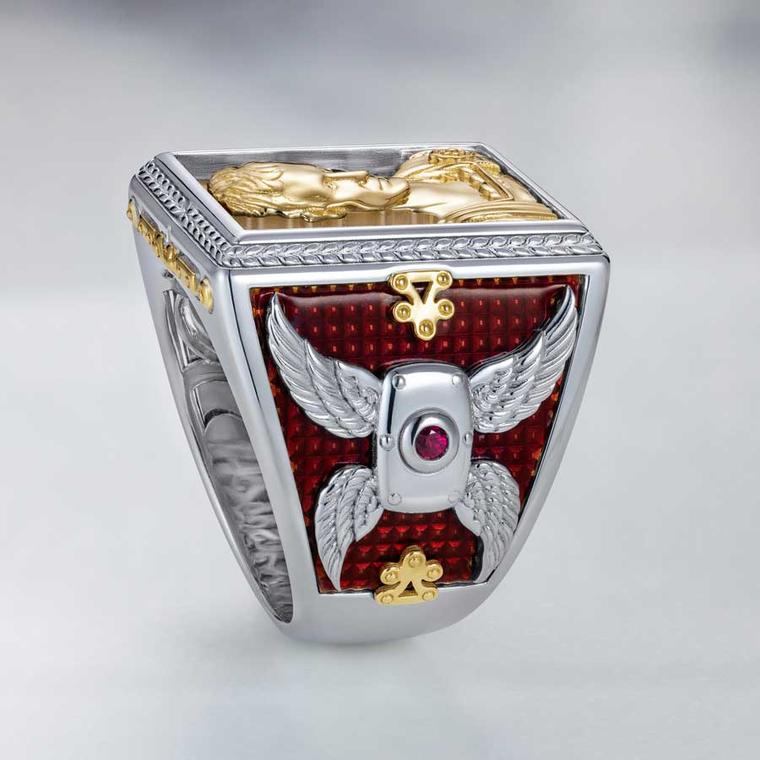
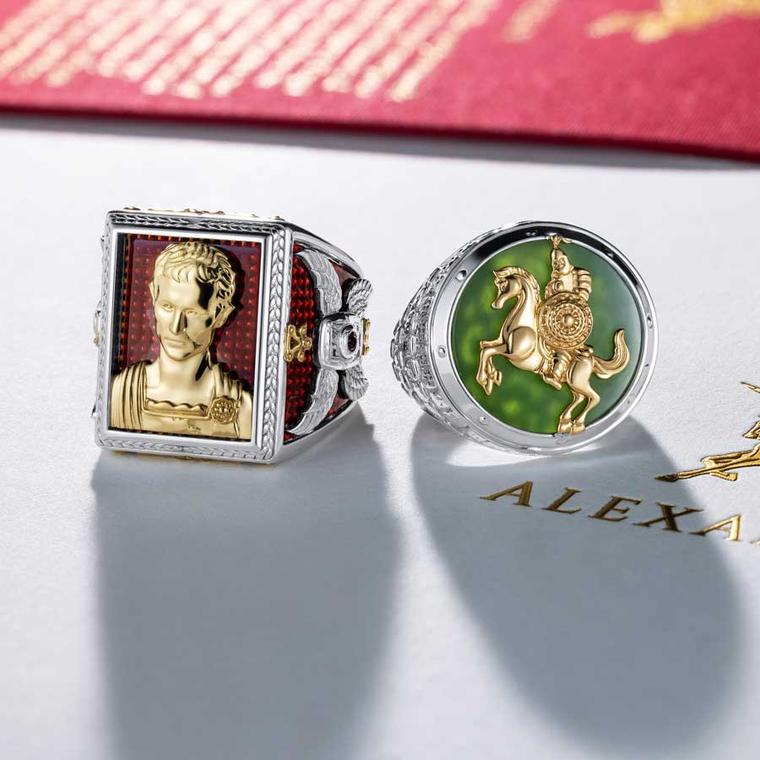
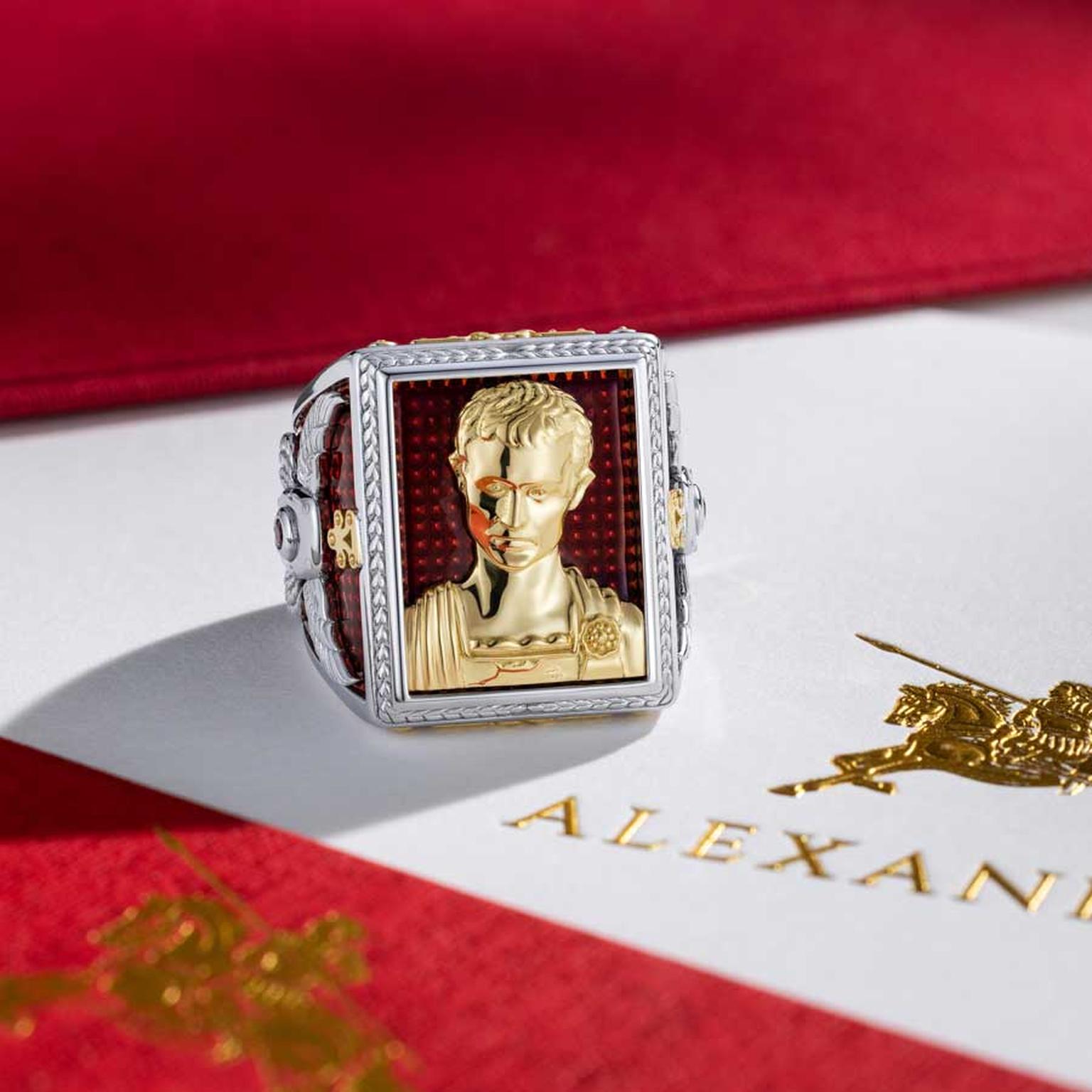
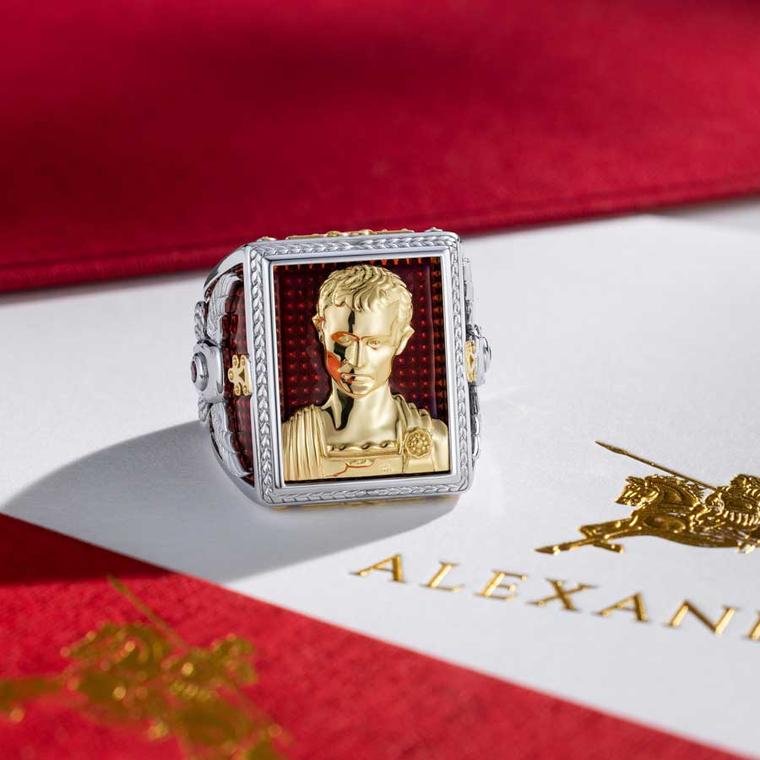
RB: Everything I do is as historically accurate as possible and present in every detail. For the Face of Rome ring, we used the C16th century bust of Julius Caesar by Andrea Ferucci to capture an accurate likeness in three-dimensional gold. I chose rubies and a rich red grand feu enamel, kiln-fired at around 800°C, layered over a deep, geometric guilloché pattern to create depth and the play of light, evoking majesty, power, and the colours of the Roman standards. The shoulders of the ring are in the shape of a scutum shield.
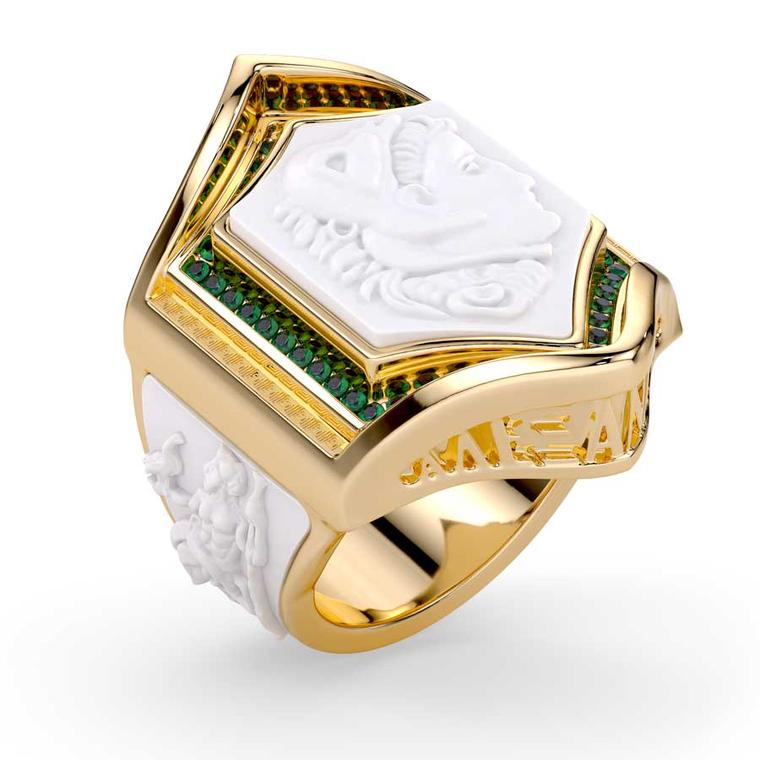
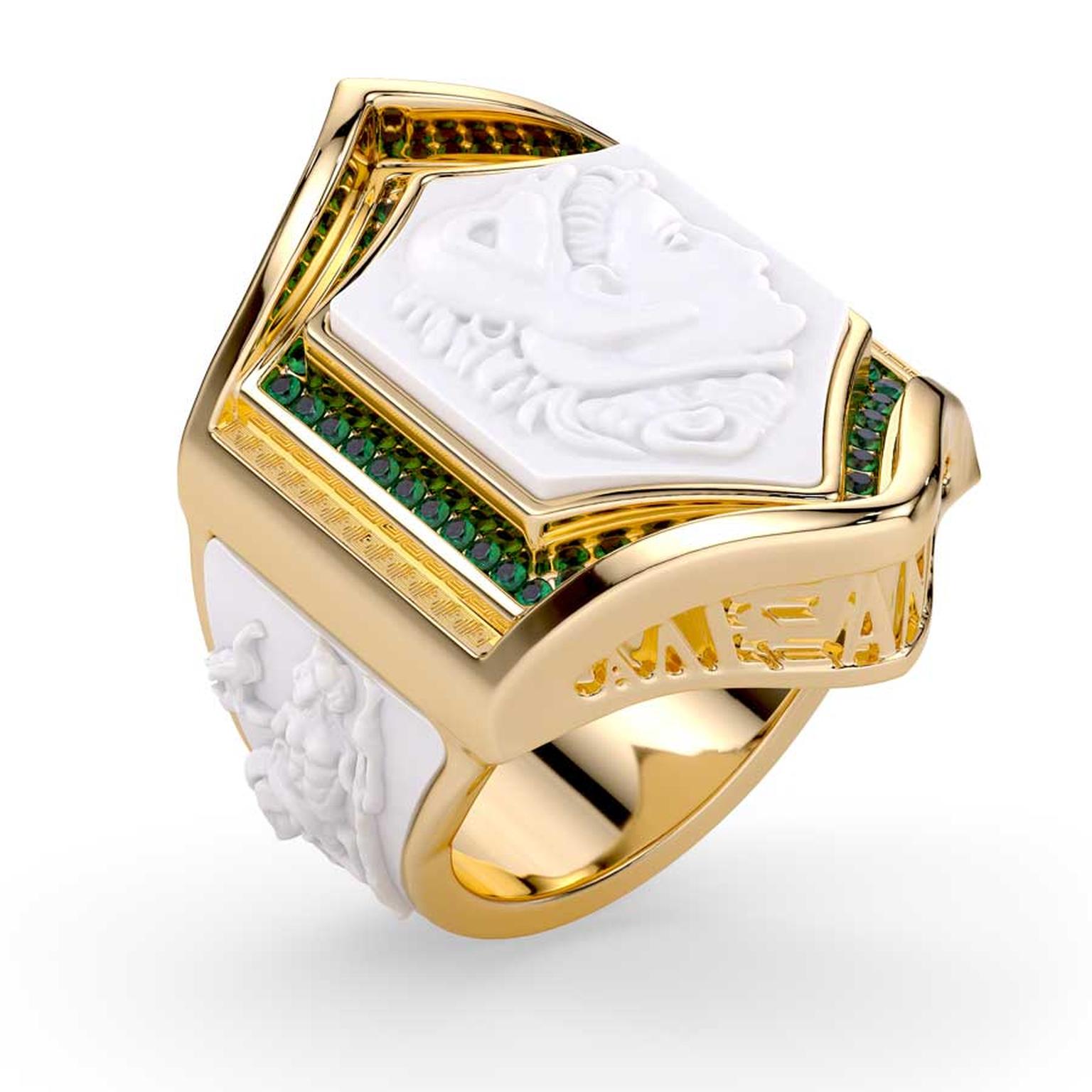
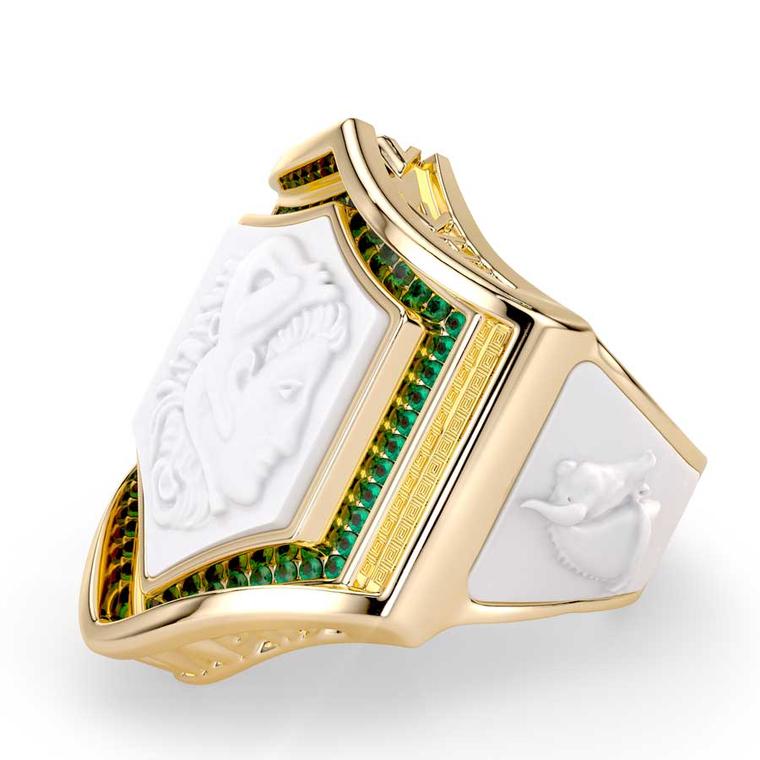
The Alexander the Great ring is based on an ancient Greek drachm coins, sculpted in a white agate hand-carved cameo, set in a frame of emeralds and gold in the shape of a shield. The story continues on the sides of the ring with cameos of Zeus and Bucephalus, Alexander’s horse, as in the original drachms.
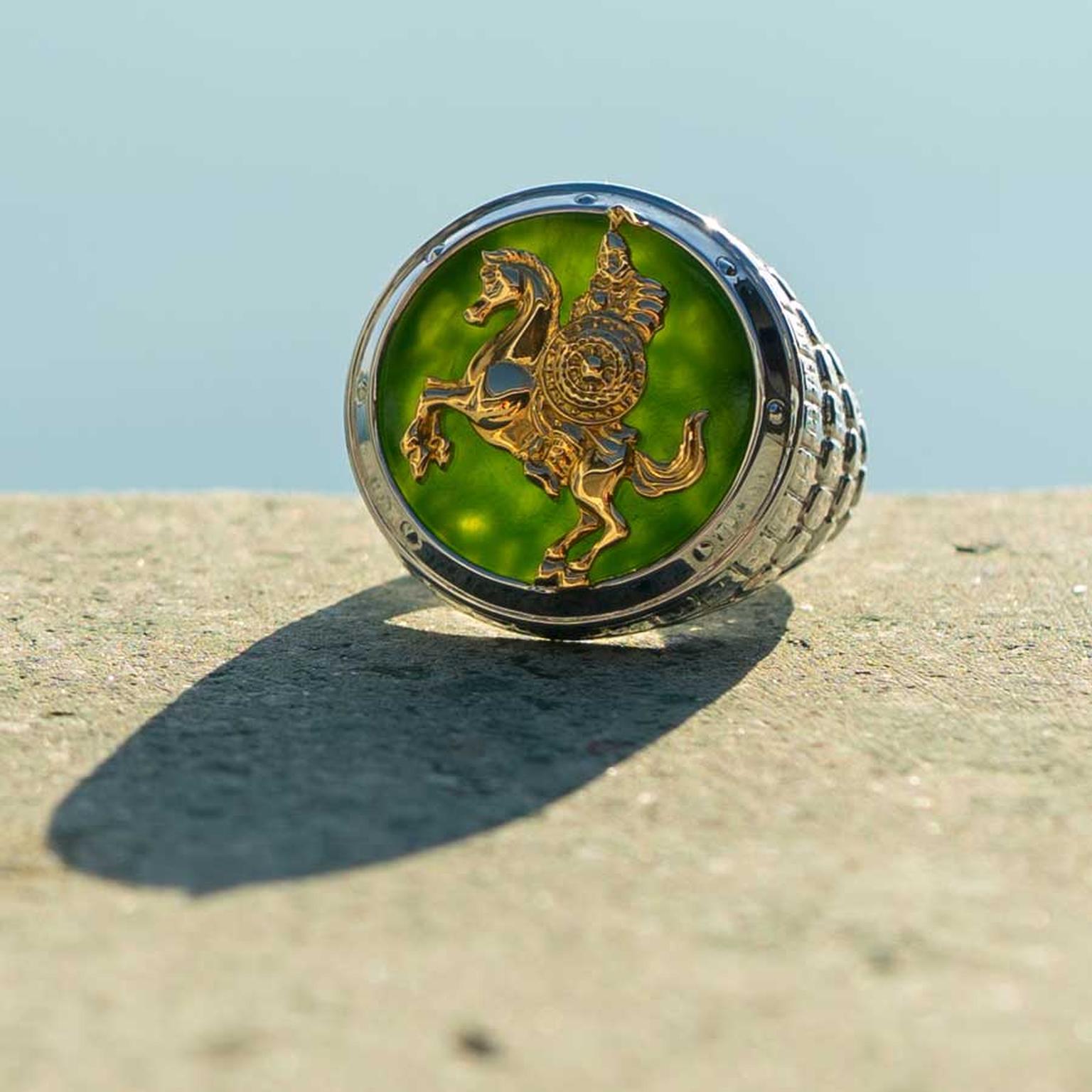
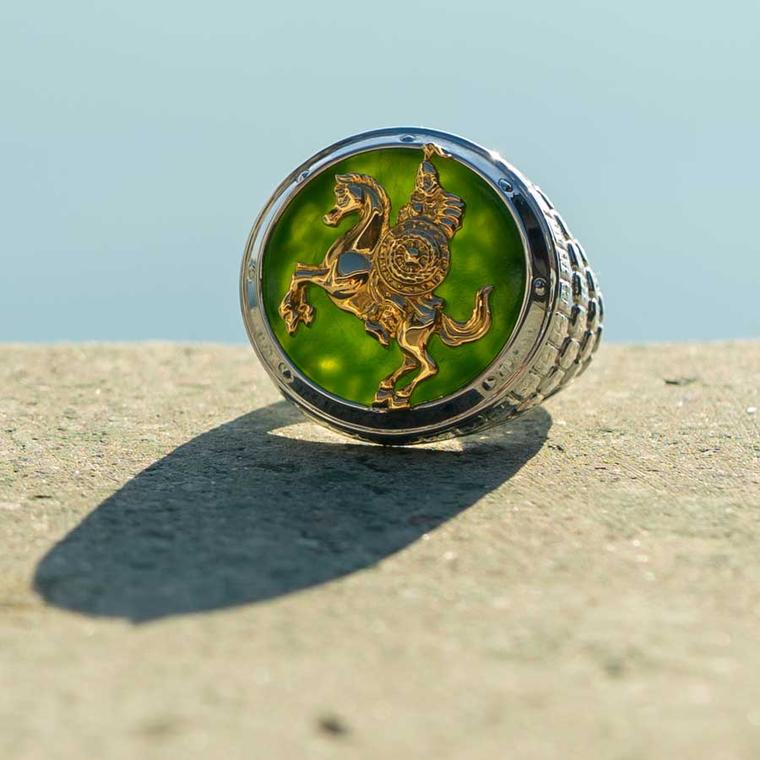
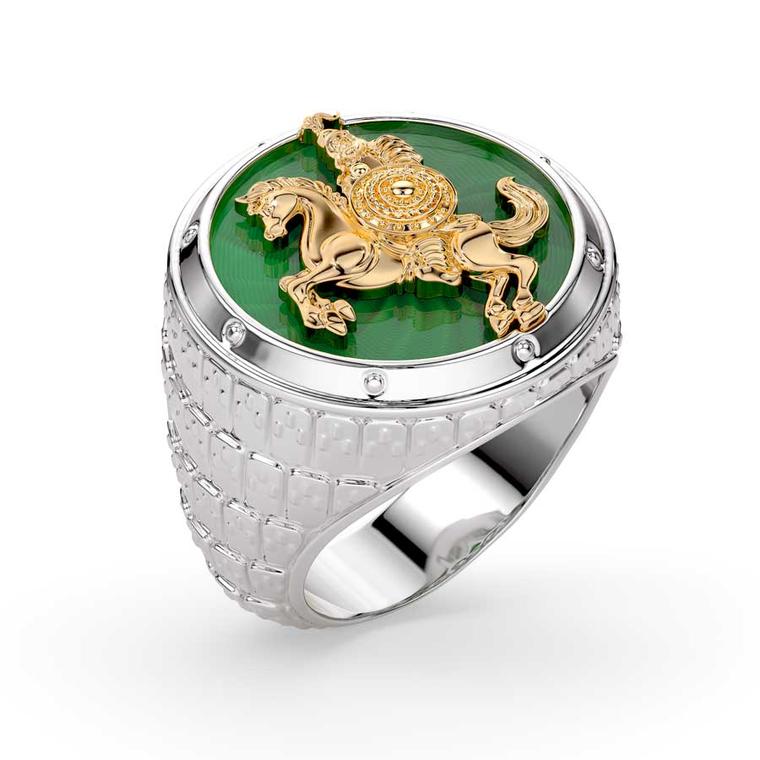
The nephrite jade in the Khan’s Dominion ring is not only the most desirable A+-grade, translucent, vivid apple green, but from the same Siberian source favoured by the Mongols. The gold sculpture of Genghis Khan on his horse is set into a white gold ring. The circular face of the ring is in the shape of a Mongolian shield including the rivets, while the cascading sides are based on Mongolian armour, reminiscent of the metal-working techniques of the era.
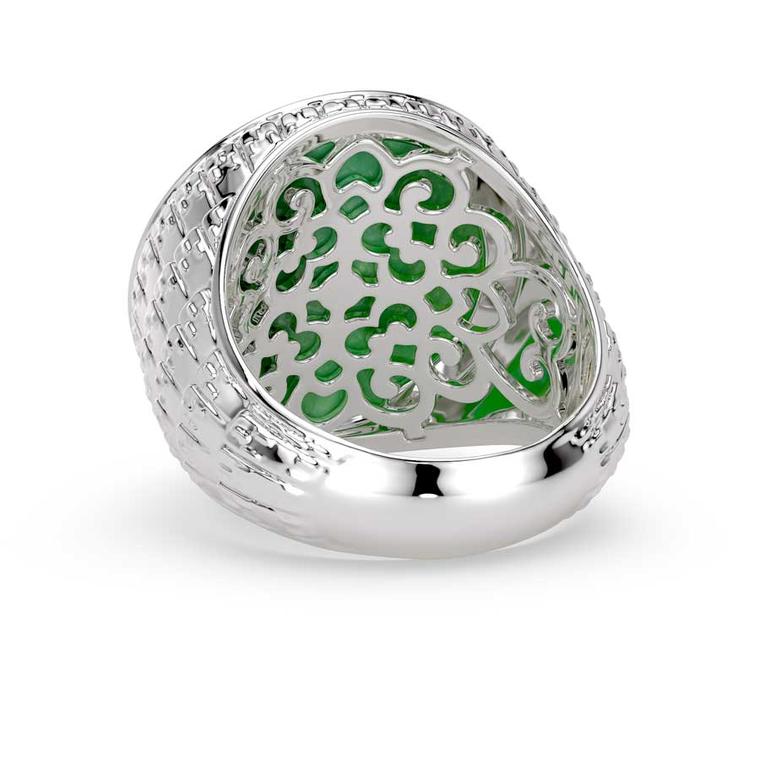
Even the openwork on the inside of the Khan's Dominion and Face of Rome rings reference motifs from the corresponding culture of these historic characters.
TJE: Why is craftsmanship so important to you?
RB: When I set out to create Alexandria, I spoke to experts in the field of jewellery, who raved about the exquisite craftsmanship of historic Fabergé pieces and others, while lamenting how nothing made today comes close, so I saw that as a challenge.
Once I assembled this team of expert artisans, I then encouraged them to go further in a quest to create the ultimate work of its kind. The jewels are all made by hand, using techniques increasingly hard to find. For example, with the Face of Rome ring featuring Julius Caesar, we achieved something experts told me was impossible: we guillochéd an entire flat sheet of 18-carat gold and then wrapped it around three sides of the ring. The seemingly impossible was achieved, which gives our rings that special quality and richness of detail, and now we have the blueprint for how to make it.
It was a long quest to find the right artisans for each stage of production. It took a year and a half to bring together the grand feu enameller, the guilloche engine turner, the goldsmiths who cast the structure of each ring and the lapidaries who carve the cameos. I found them in all sorts of odd places, but I persevered in tracking them down. They are all over the UK, and many of them are the last few to preserve and excel in their craft.
Each ring presents its own challenges and all are difficult to make, and there are very few people in the world who can make jewels this way. We didn't always know if the final pieces would actually come together, but we put in the time and effort and are incredibly proud of the outcome.
Ultimately, I am honouring historical characters, making jewels to the highest standard, worthy of these great men. I ask myself whether Julius Caesar, Alexander the Great or Genghis Khan would wear one of my rings. I hope they would.
TJE: What are your plans for the future of Alexandria?
RB: I have a lot of ideas for new rings, necklaces, and other jewels and objets, but it takes time, as each piece is a new universe, and requires a large amount of work to decide how to make it.
New themes bubbling in my head include Achilles, Babylon, and Cyrus. I am not short of ideas. I also offer a bespoke service that reflects a client’s story and heritage, telling it through jewellery and objets.
My dream is to build a workshop where I can gather all these talented artisans, who are among the last to master these dying arts, we are making progress but still a little way off.
In the meantime, I am continuing on my path of building up Alexandria, which I call: a new high jewellery house for the modern conqueror.