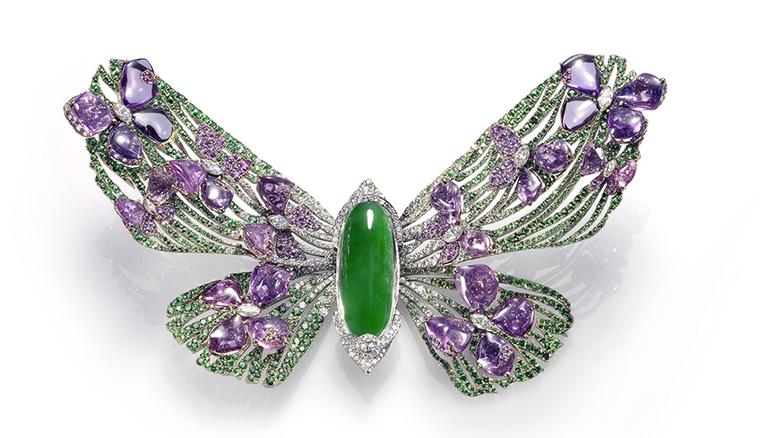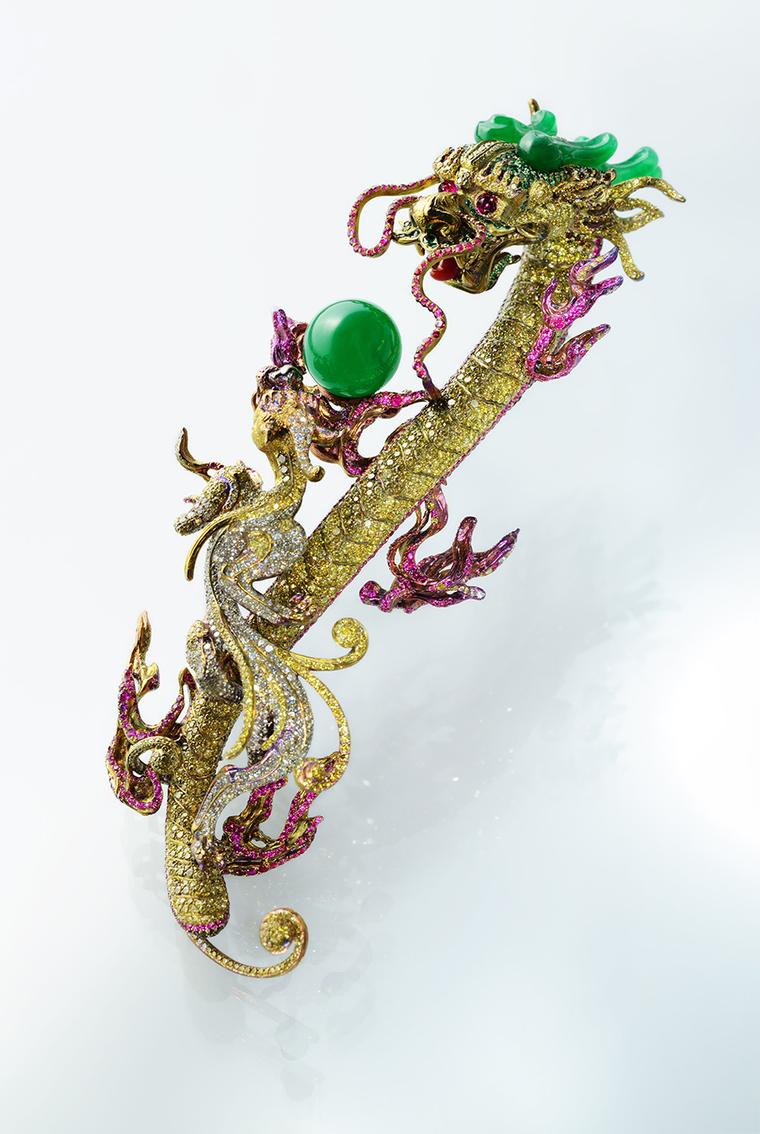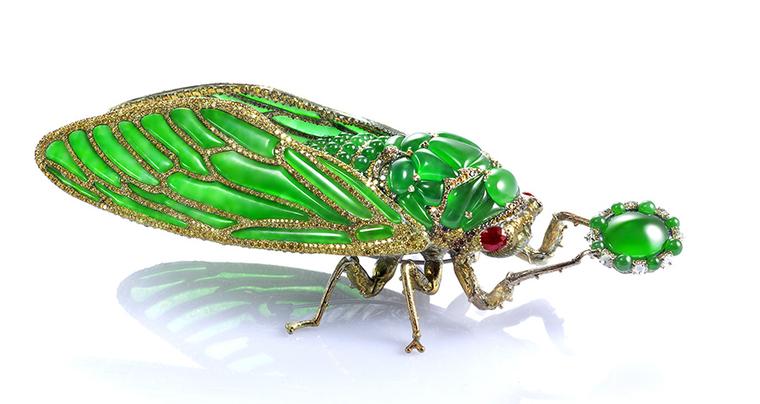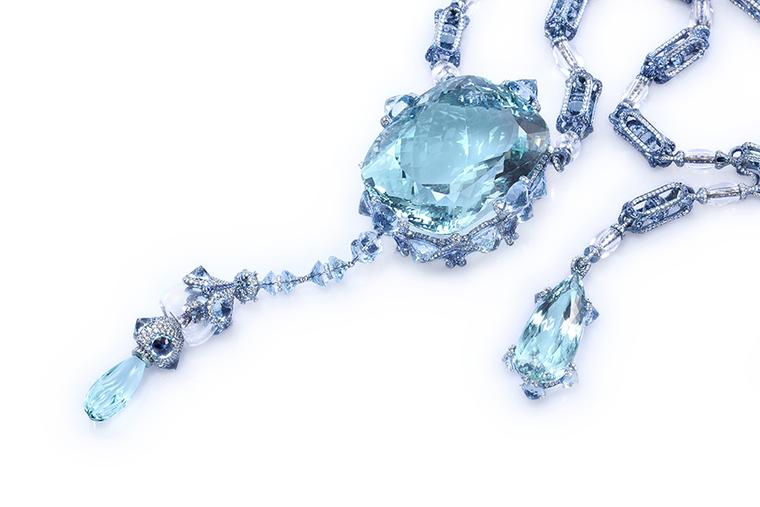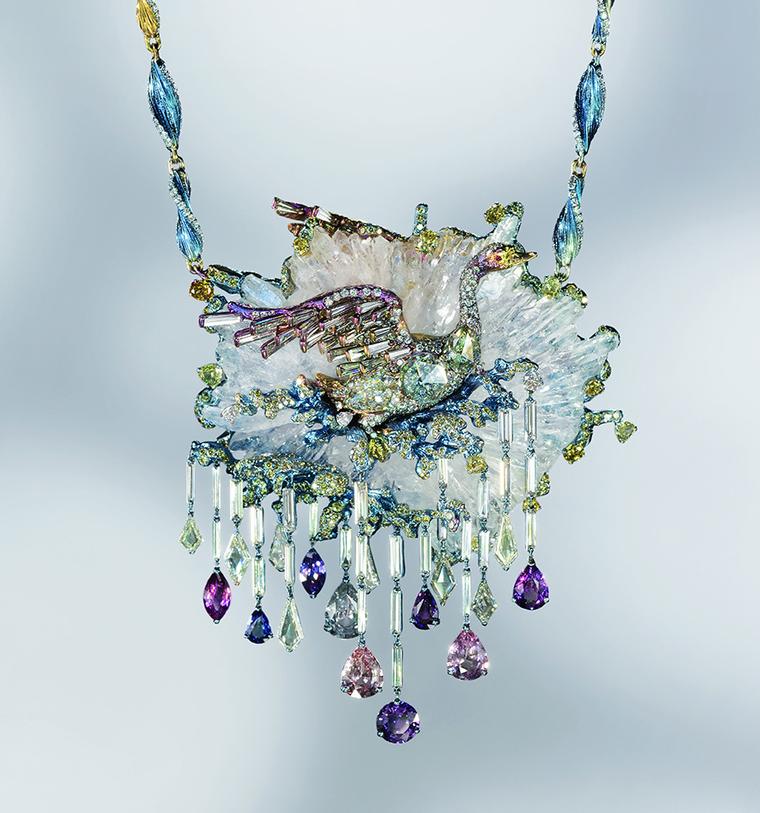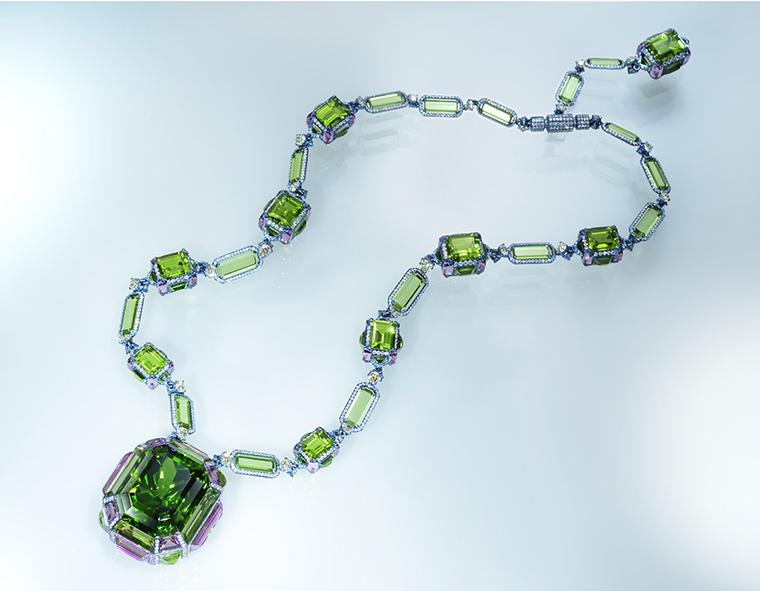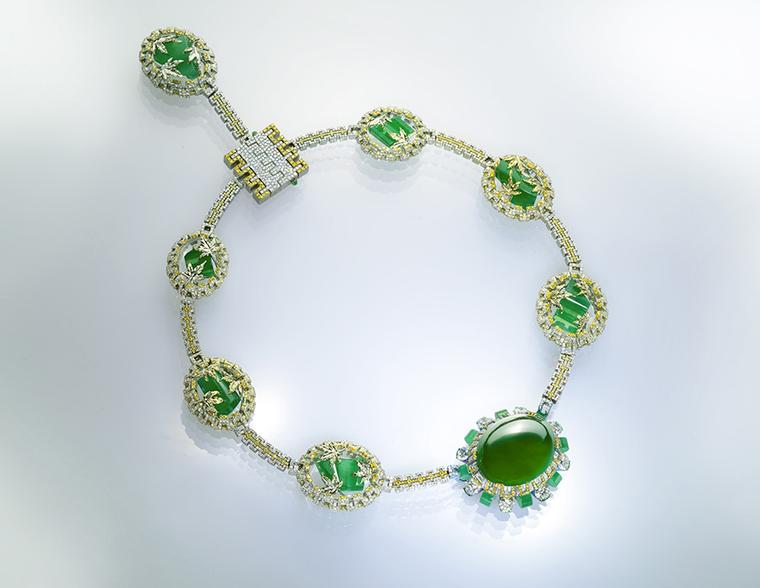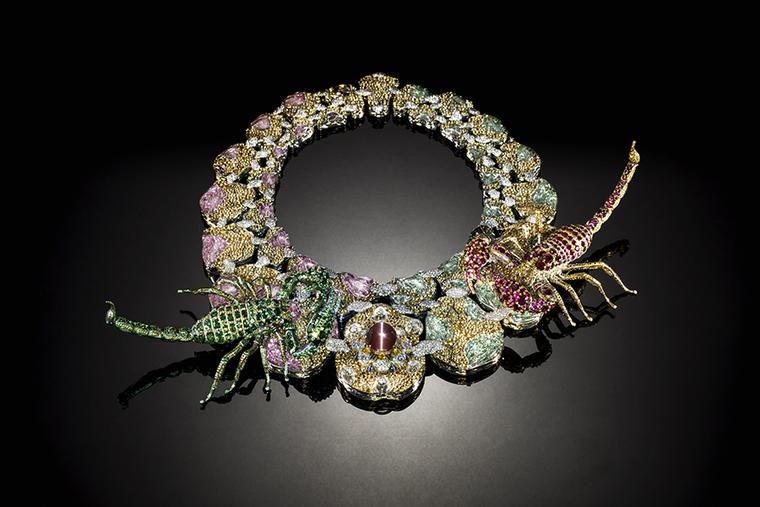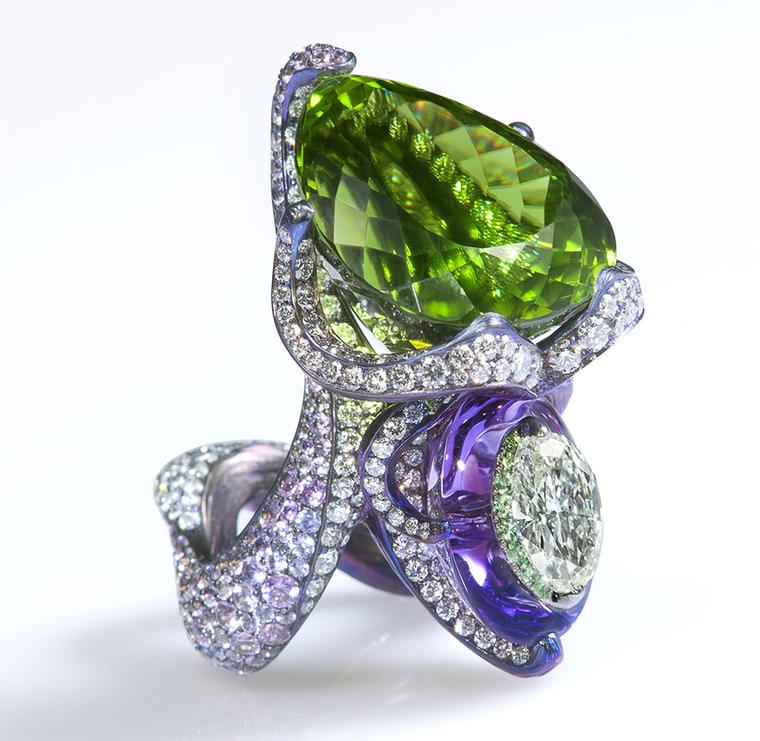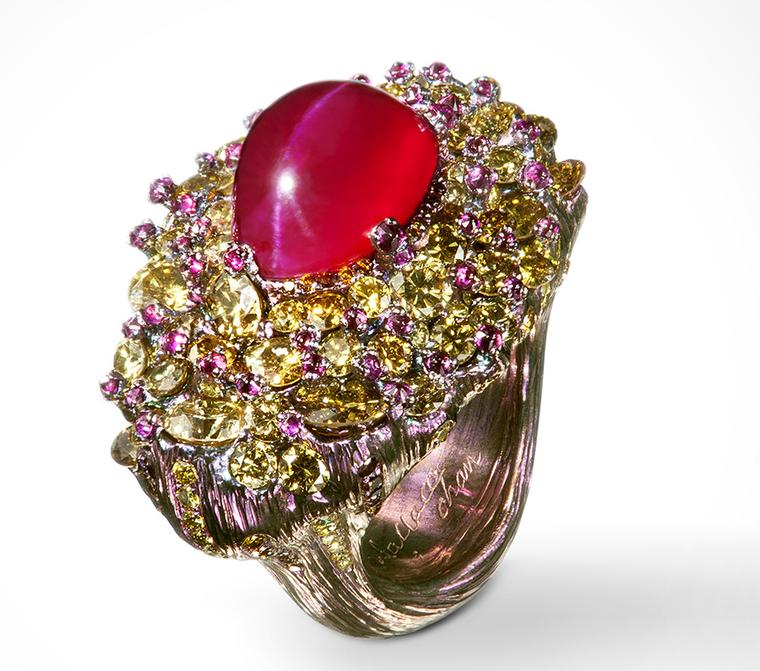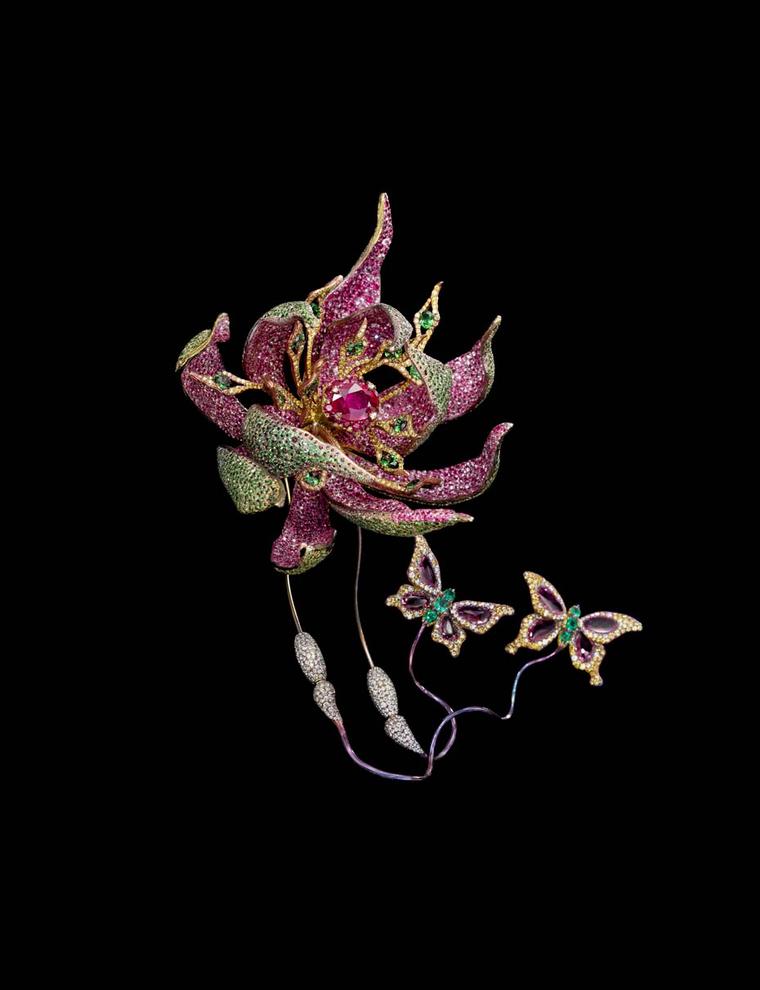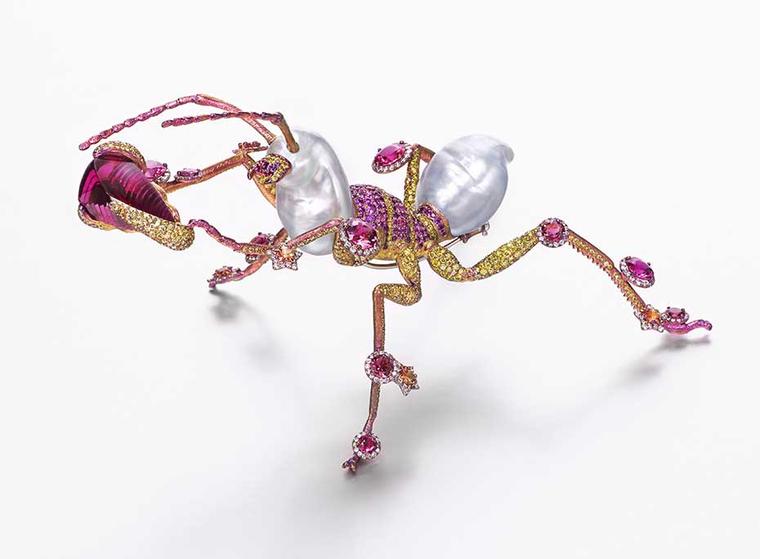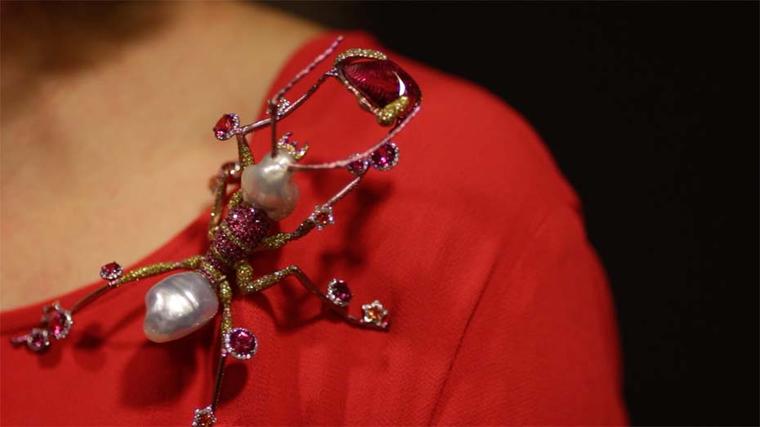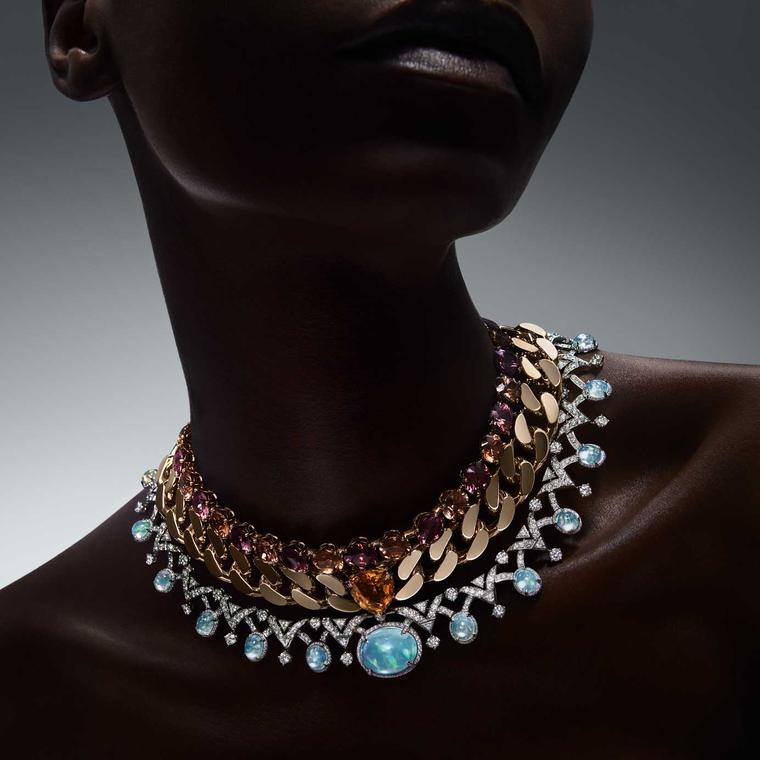
Wallace Chan made his debut at the 26th Biennale des Antiquaires in Paris with his extraordinary jewels made in a range of eye-catching materials crafted to levels of astonishing and delicate detail. The collection is called "The Path to Enlightenment - Art & Zen" and on show were 50 pieces worth 230 million euros.
"With each jewel I have a story to tell," says Chan. "As a Chinese jewelry master, I hope to bring to the 26th Biennale des Antiquaires the essence of oriental and philosophy and Chinese culture. My jewelry pieces are created to open up a profound dialogue between cultures."
Hong Kong native Wallace Chan began his career carving precious stones. Showing an innate gift for this craft he developed what he later called the "Wallace Cut" an adaptation of the medieval intaglio and cameo carving techniques that creates a realistic and three dimensional carving inside a crystal with mulitple reflections. From this detailed and finely calibrated work, the move into jewellery was a natural progression.
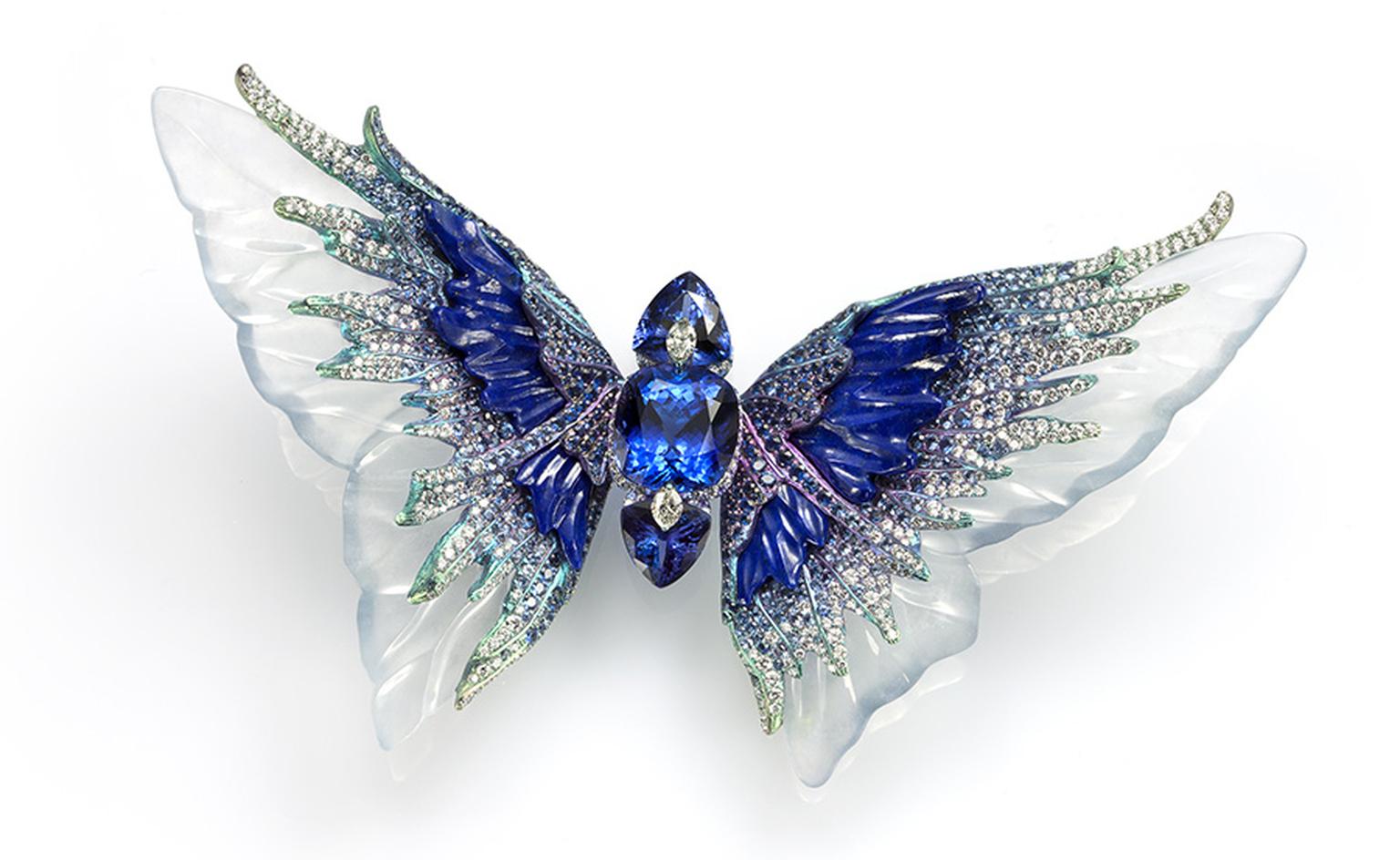
But this is where comparisons with traditional techniques and styles end as there is nothing conventional or expected about Chan's work. His jewels looks like nothing else and had me wondering what on earth I was looking at: what are these gossamer fine layers of smokey crystal, where are these extraordinary colours coming from and how can one stone appear to hover inside another? Just how has he managed in hard stone and cold metal to capture the frailty of a butterfly's wings or the wispiness of a celestial cloud? How can he create such extravagant, almost baroque jewels that are always original and breath-taking?
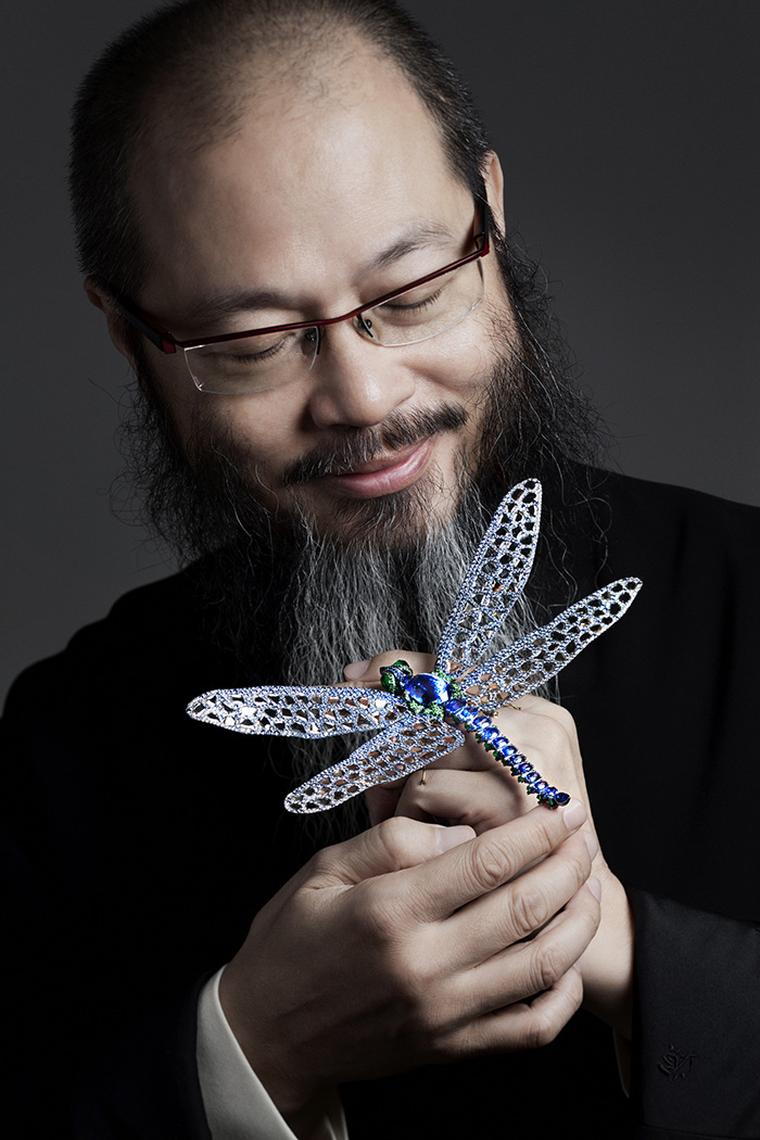
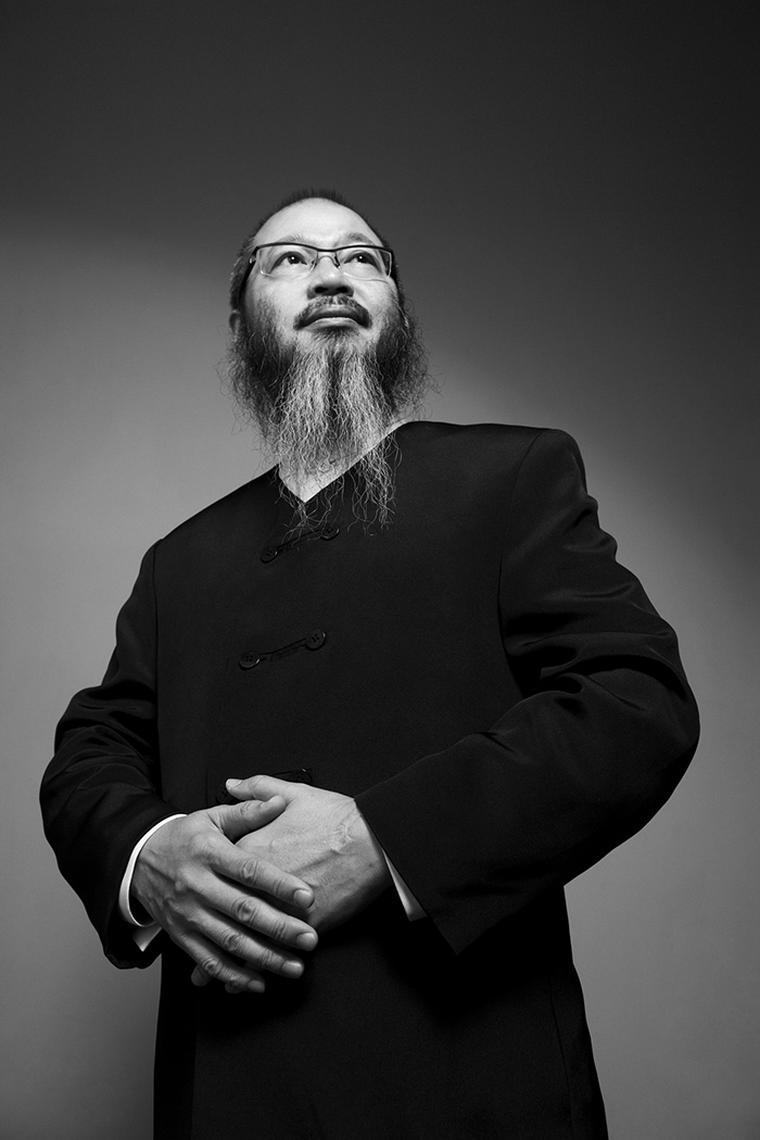
With a Confucian-style long beard and black tunic, Chan embodies the spirit of Asian philosophies and religions in his work and aims to delight the eye as well as touch the soul with his interpretations of nature. Chan tells me that he uses real butterflies to recreate their exact anatomy and in one brooch, he even encased the wings between layers of carved rock crystal and mother of pearl allowing the powdery natural colour of the insect's wings to glow through the transparent stone. His ability to turn the ordinary into the extraordinary is the mark of a true artist jeweller. As well having a genius talent for carving and the most painstaking craftsmanship, he has also put in time mastering materials such as ultra-light titanium to create these jewels that are as delightful as Nature itself.
Wallace unites invisibly the metal 'skeleton' of his works with the gemstone 'flesh' by inventing new setting techniques. Not satisfied with conventional claws or collets to hold stones he has developed what he calls the "the diamond claw setting method" and the "inner mortise and tenon setting method". The first one does away with metal claws and actually uses diamonds and gems as the setting which sounds as baffling as the result is sublime. The second method adopts the Ming-style architecture mode of joining materials by cutting stones to form a mortise and tenon joint, which believe me, is as complex as it sounds. All you need to know is that it looks out of this world and allows for seamless flows of form and a richness of colour uninterrupted by metal.
Wallace Chan's jewels have captured the imagination of jewellery collectors and experts around the world. The fact that he was invited to show his jewels at the Biennale des Antiquaires, the most prestigious fine jewellery show on the globe, is testament to both Chan's artistry and the organisers' knowledge and sound judgement. Chan is the first Asian jeweller to show at the Biennale des Antiquaires.