Hermès presents a set of new Arceau watches that showcase the unusual talents of a range for craftsmen, from enamelling to straw marquetry. At Hermès, high horology has always been treated to the most poetic of inspirations and for this house that prides itself on taking its time in the careful production of every product, it shows particular care over its watches. Each of these Arceau watches are testament to this philosophy full of considered details and rare workmanship that only patient, ardently time-consuming artistry could produce.
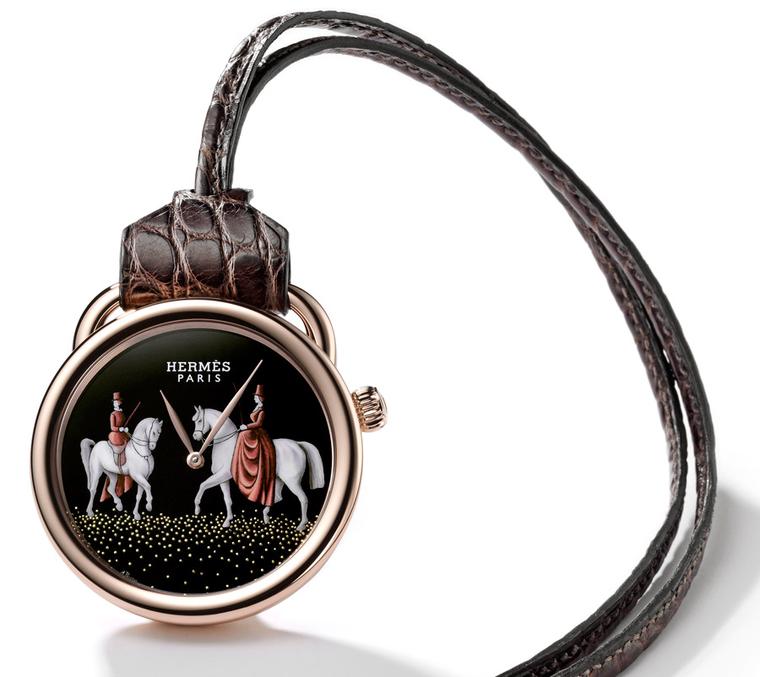
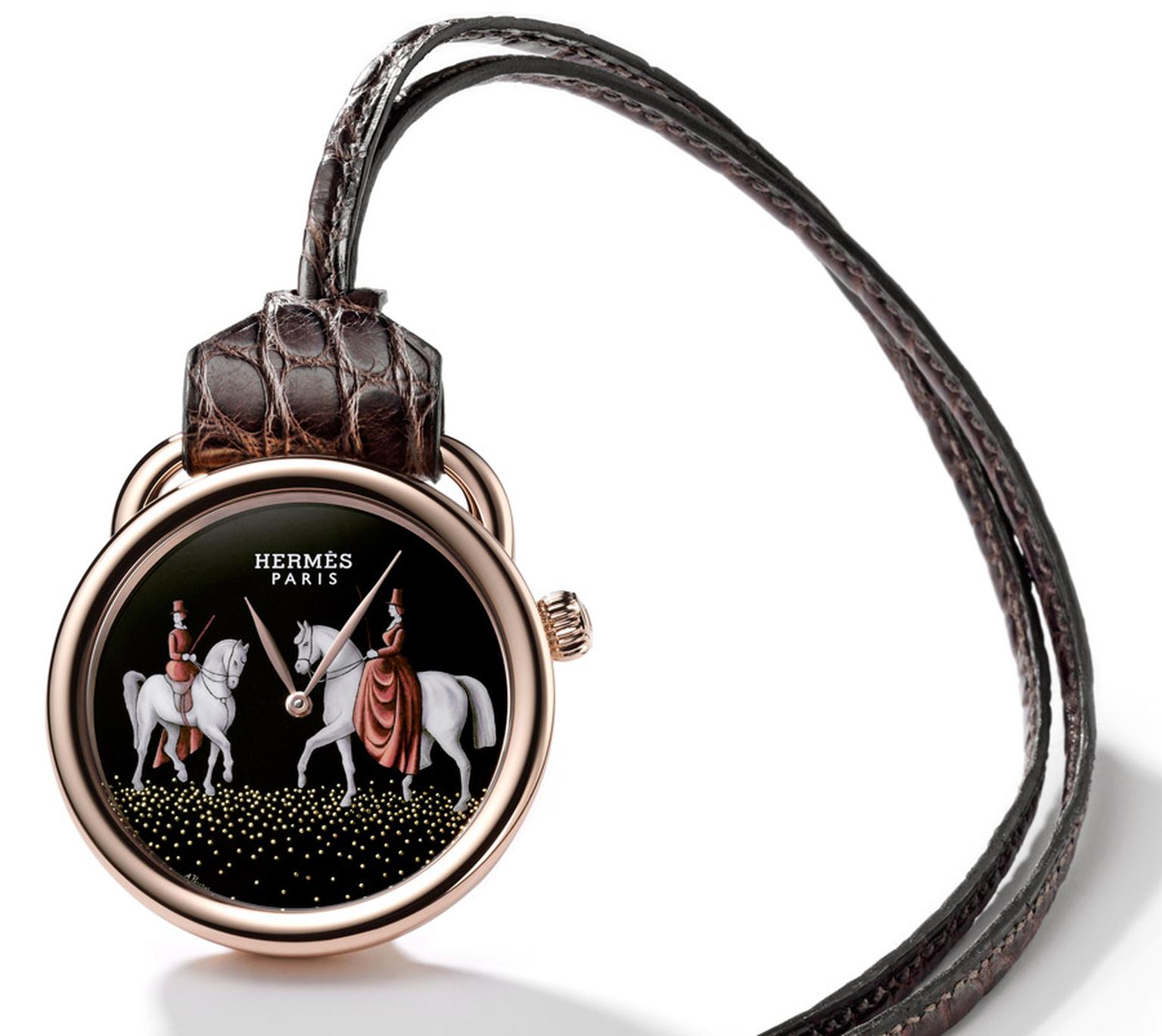
The limited edition, one of a kind Arceau timepieces each bear the unmistakable touch of hand craftsmanship that the house of Hermès is so proud to be known for, be it a leather saddle, a watch strap, or those famous highly sought-after handbags. The Arceau Pocket Amazones is the perfect example of what this is all about with so many details to explore. The paillonné enamel dial displays riders mounted on their horses as they canter over delicate gold spangles. The pattern was inspired by the motif of a tie designed by Henry d'Origny, who has been designing a wide range of products for the house for several decades. I like the way that Hermès interprets designs and motifs across a range of products, giving the brand a strong house style and a sense of continuity. Hanging from a hand-sewn alligator strap, the rose gold pocket watch case holds a Manufacture self-winding H1928 calibre.
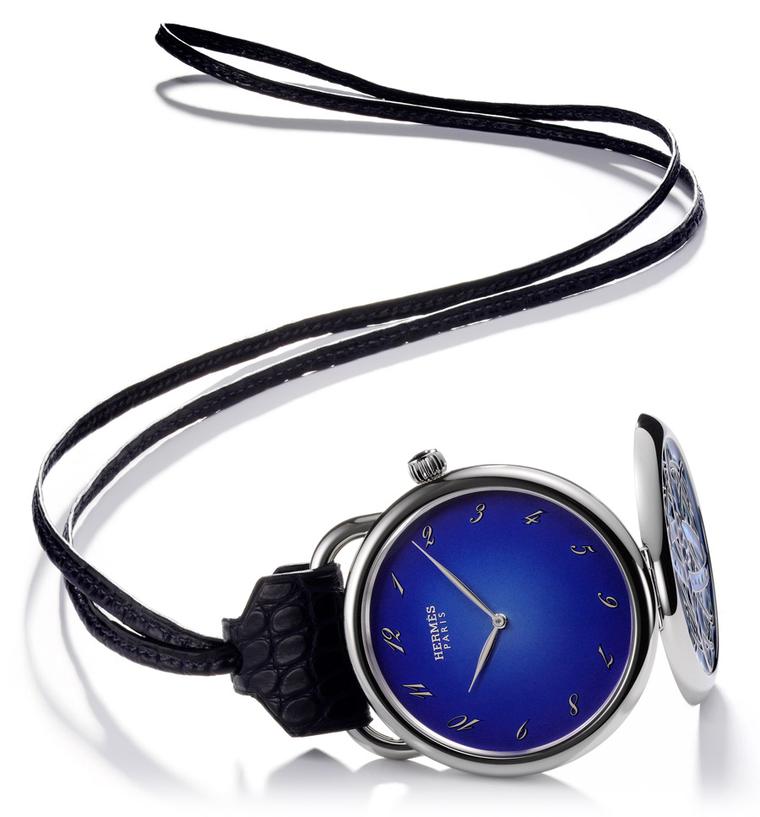
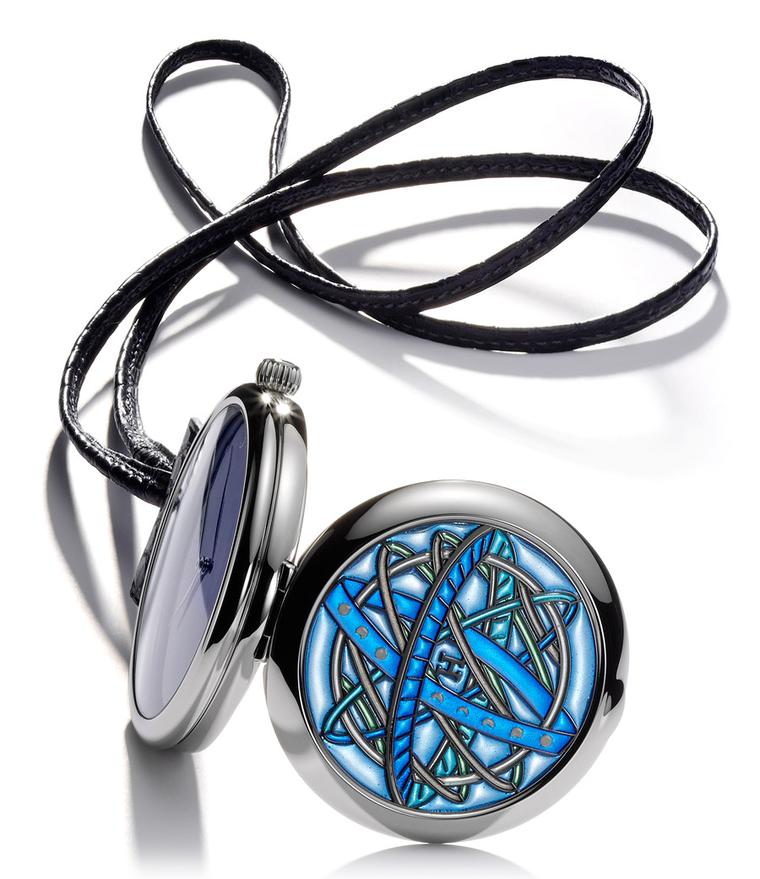
The beauty of these designs isn't limited just to the watch faces and for example, the outer case of the Arceau Astrolabe is decorated with a specially commissioned plique-à-jour enamel with a celestial theme. The astrolabe's original Greek meaning is "star-taker", referring to an instrument that determined the time using celestial bodies as reference. Plique-à-jour enamelling is particularly intriguing as light flows through the transparent glass-like cells of colours, associated with early 20th century jewels signed by the most creative and experimental jewellers of the time such as René Lalique, Tiffany and Fabergé.
Making plique-à-jour enamel involves three stages: firstly, the motif is etched onto a thin sheet of metal, then the outline of the design, in this case the astrolabe, is formed by the remaining gold wires to form pliques or windows of metal filigree; secondly, the windows or cells that are filled with enamel. Then sequential firings at 800°C reveals their colours and transparency.To give a sense of wondrous depth, as with the Amazones watch, gold spangles are also deployed.
Celestial themes are also to be found on the face of the Arceau Attelage Céleste wristwatch that is studded with golden flashes of light representing far-off celestial bodies. Here one can make out the magical outline of the 'Duc Attelé' or the Hermès emblem amongst the sparkling star-like pin points of the grand feu paillonné enamelling.
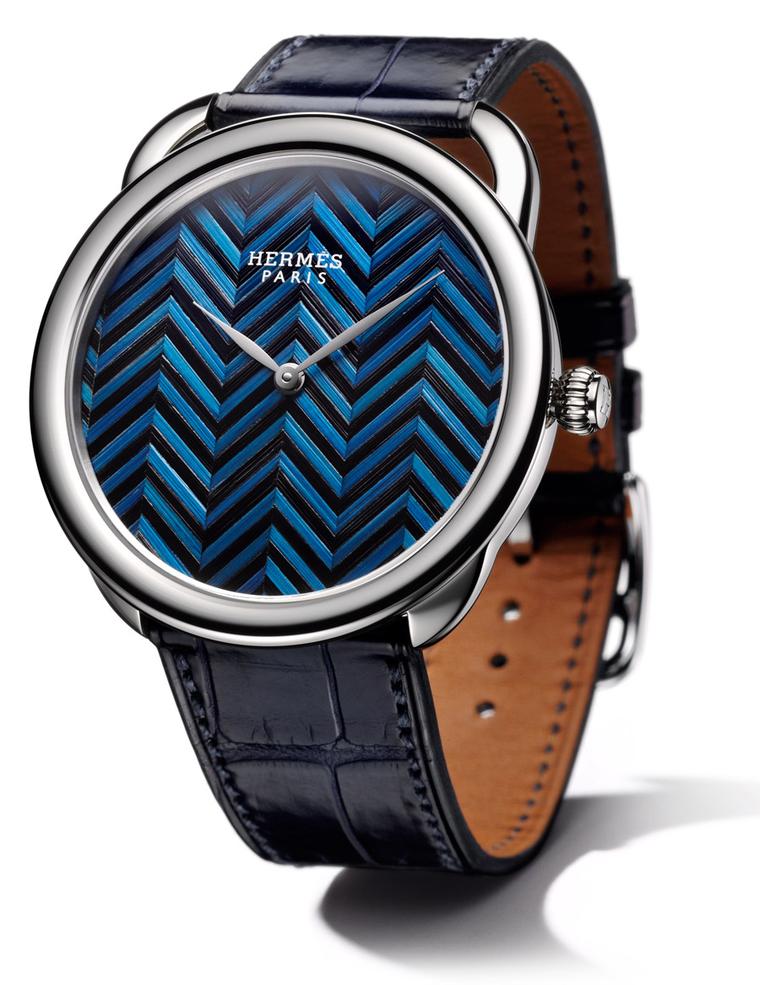
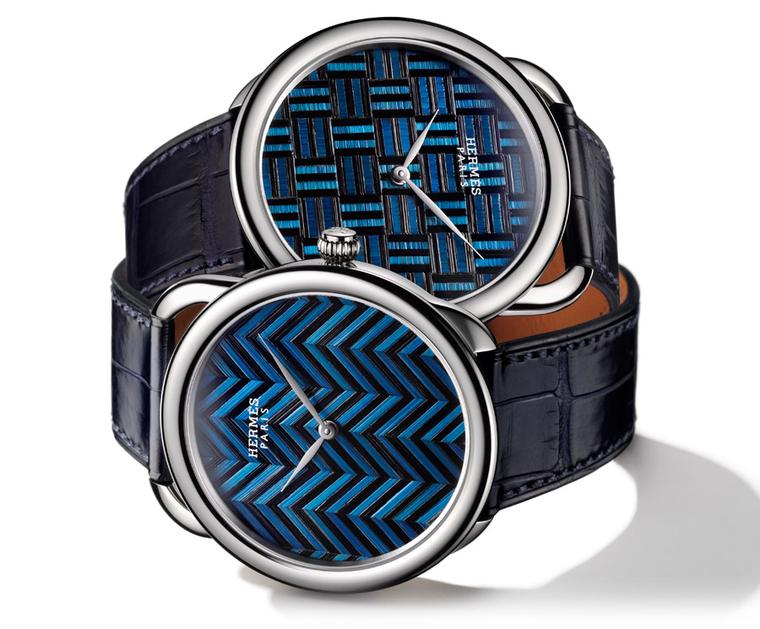
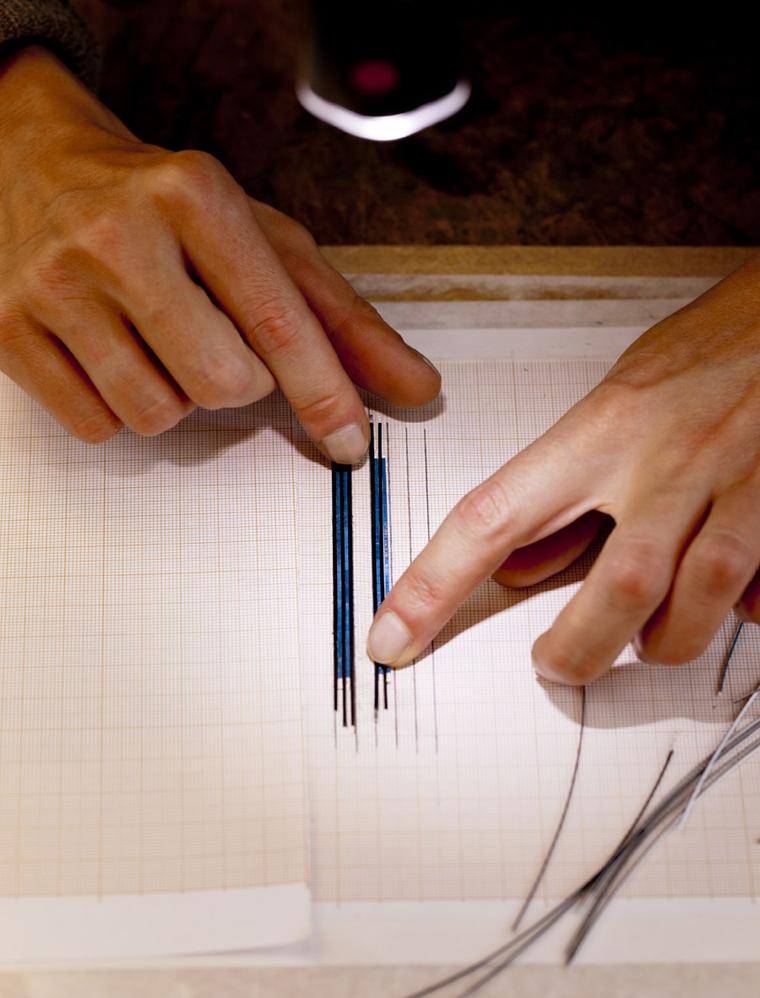
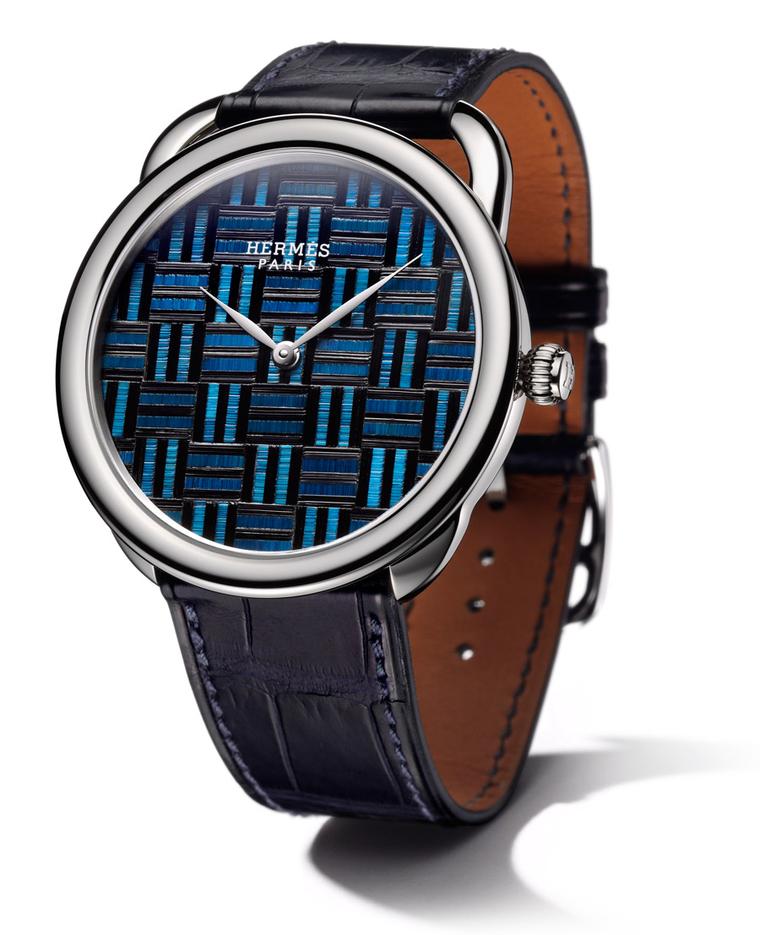
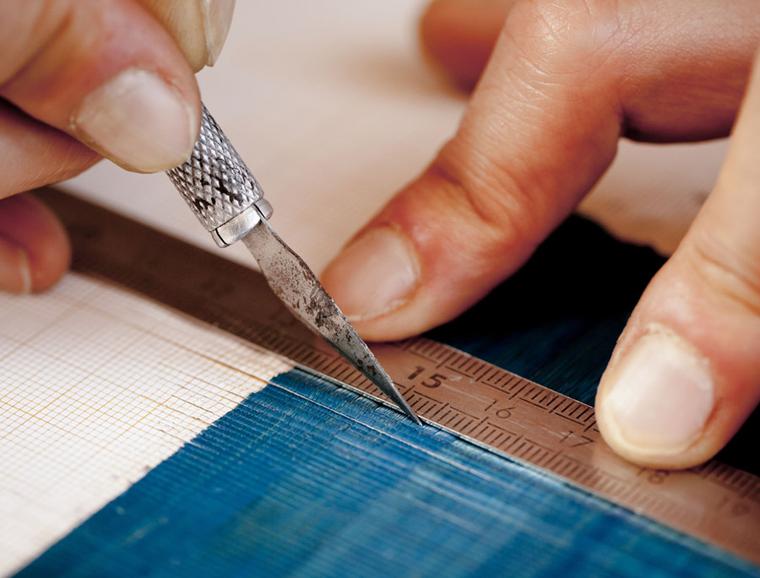
In the hands of Hermès' experts, all materials, however humble in origin, hold the possibility of noble expression and an unusual craft is showcased in the two Arceau Marqueterie de Paille watches. Straw marquetry makes an art of designs created with that humble material straw, elevated in this case to a fine craft. Specially prepared rye straw is employed to create precise, richly textured patterns on the dial. The straw is hand-reaped and then submitted to a variety of weather conditions. Then, artisans carefully hand cut, measure, and combine thin strips to create the marvellous geometric straw marquetry adorning the two watches. Both were created as tribute to the original Henry d'Origny designed Arceau of 1978, and the motifs themselves echo two iconic Hermès tie patterns featuring chevrons and tiny squares and a tribute to the artistry preserved in the Hermès workshops, where the human hand brings raw possibility to life.