Our antique jewellery expert has spotted this interesting piece in the upcoming Christie's sale in South Kensington on the 20th April 2011. Read about how one jewel captures an important moment in history.
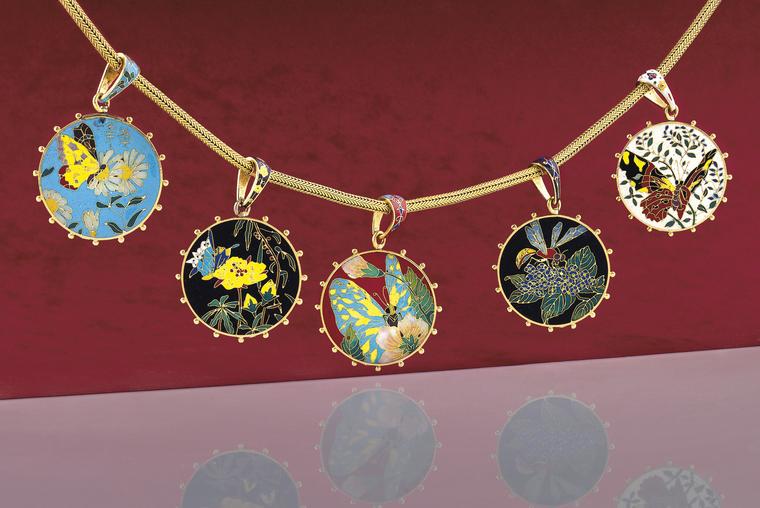
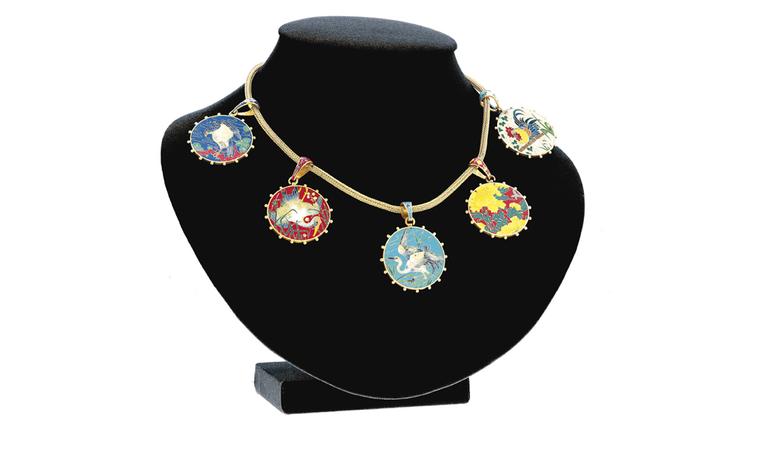
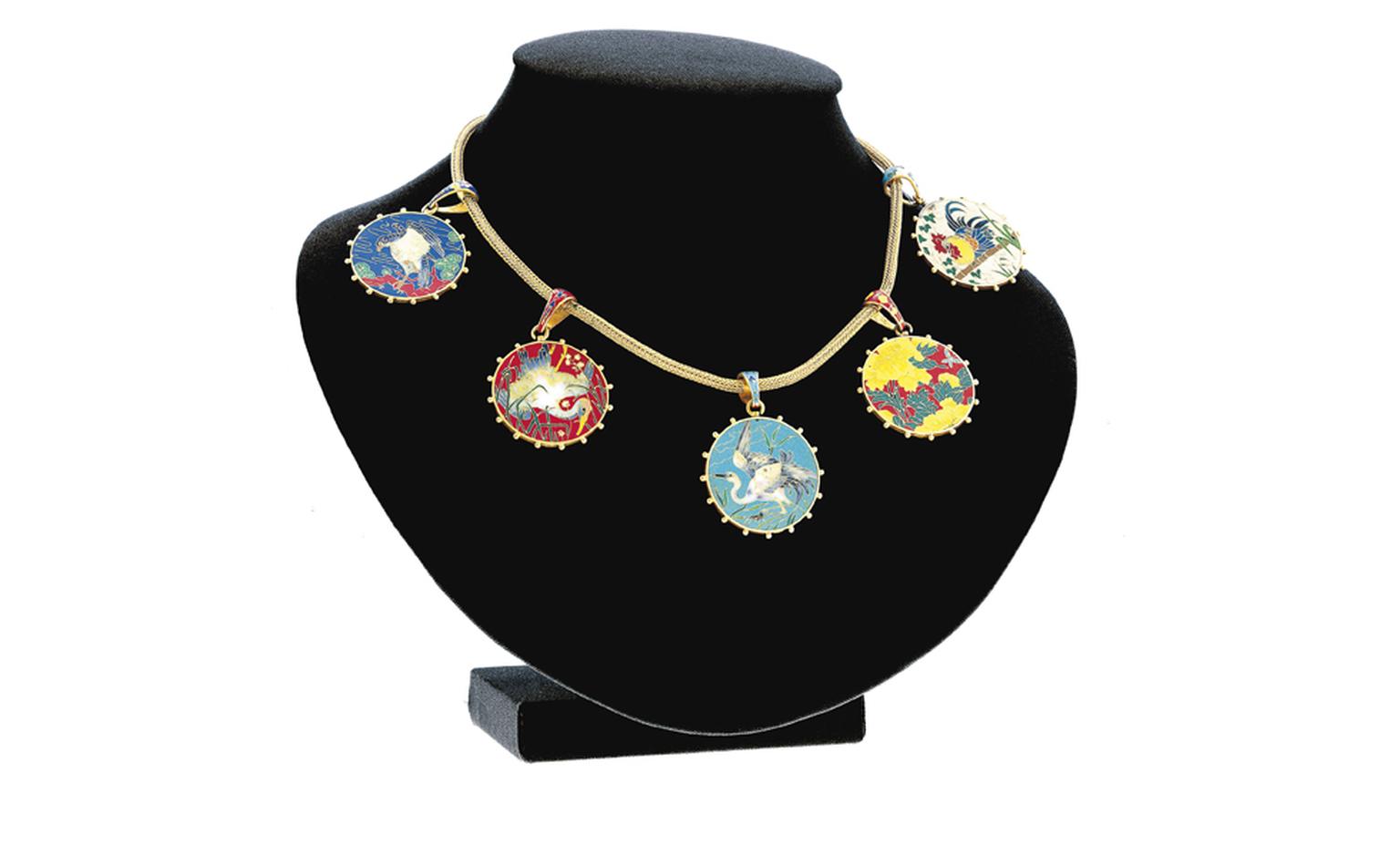
One of the most interesting lots at this auction in South Kensington, London is lot 254, a 19th Century Necklace by Alexis Falize, est (£25,000-£30,000). It is a gold and enamel necklace consisting of double sided medallions. Alexis Falize was a leading Paris jeweller who was known for working in the Japanese style. In 1853 Japan was 'opened up to the west' by four American battleships who insisted they be allowed to trade with Japan. Japan's period of self-imposed isolation that lasted two and a half centuries was now over and ports were gradually reopened to the rest of the world. This resulted in a huge influence of Japan on American and European jewellery. Japan and China were very strong in Cloisonné enameling and Falize depicted this traditional technique in his work. Cloisonné is a way of enameling in which fine wires are arranged to create the lines of the decorative picture and then an enamel paste fills in the colour areas before the object is fired and polished. Motifs and symbols are a huge part of Japans culture and they often act as a visual communication. One can see the plants, flowers, animals and natural depictions adorning Japanese artifacts from ancient times. This is all reflected in Falize's jewels. This necklace has five fine cloisonne medallions all signed with the makers mark AF. The medallions are encompassed within gold boarders that have a pretty bead detail around the edge. They hang on a flexible gold woven chain by enamelled loops. This lot is particularly apt at the moment as it fits in very well with current and upcoming exhibitions in London. At Wartski from 10th-20th May there is a loan exhibition: 'Japonisme: From Falize to Faberge; The Goldsmith and Japan.' There is also a fantastic exhibition at the V&A. 'The Cult of Beauty: The Aesthetic Movement 1860-1900'. It will be very interesting to see how this sells.