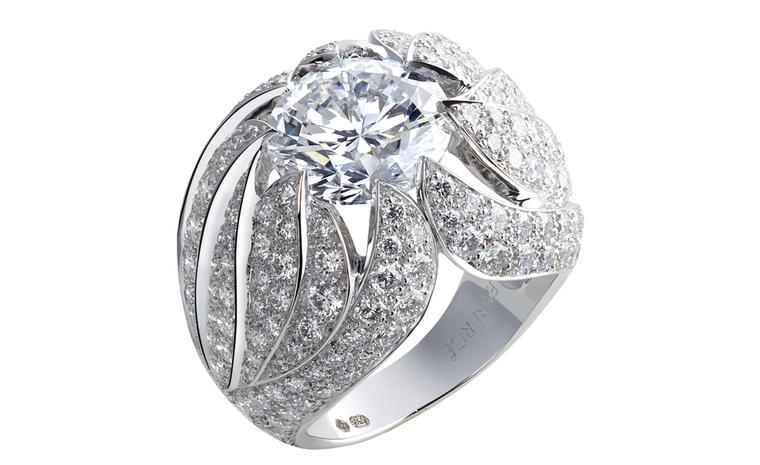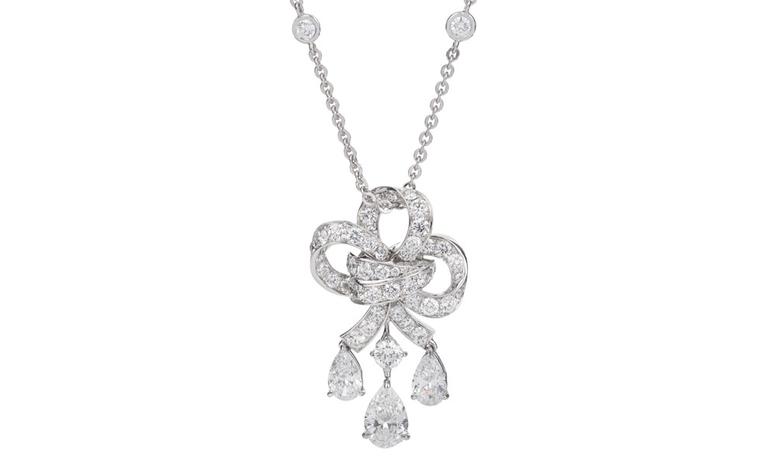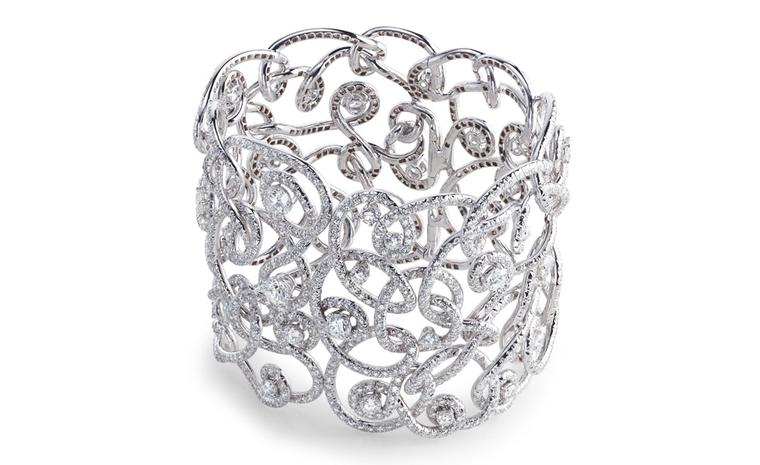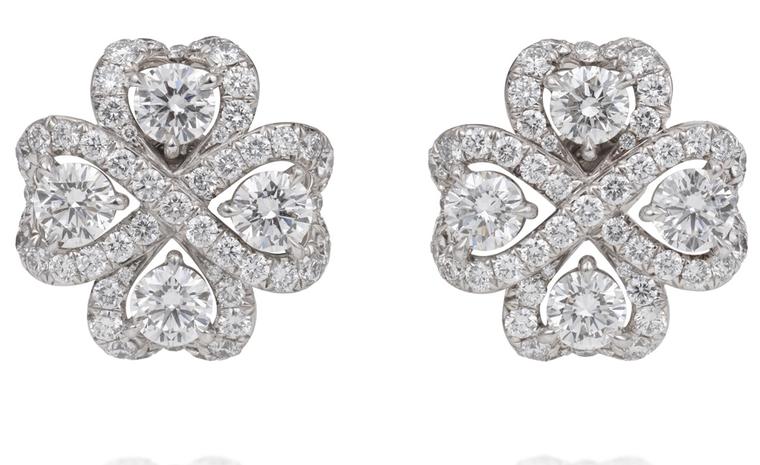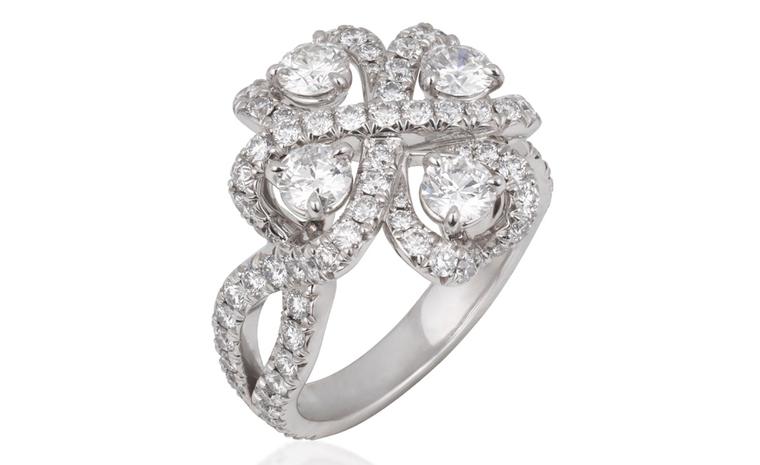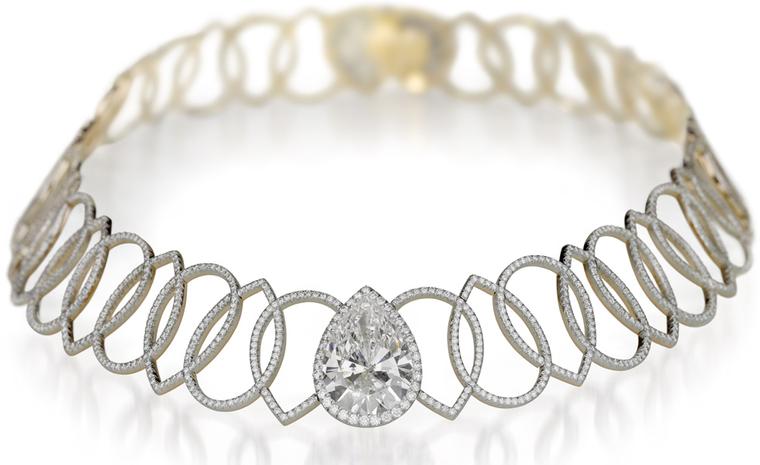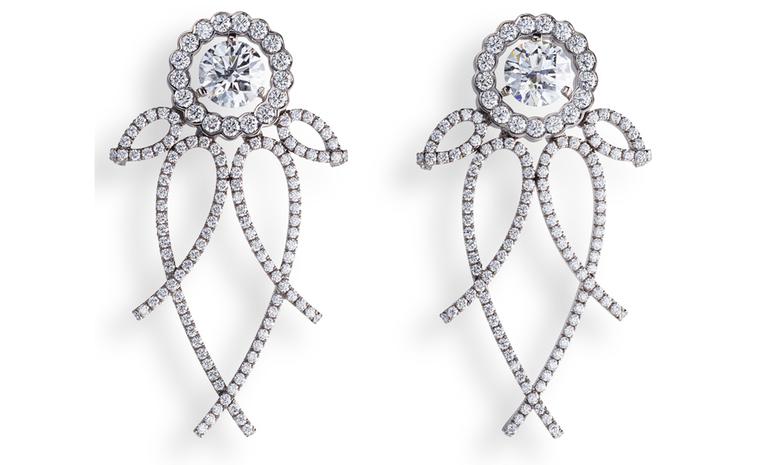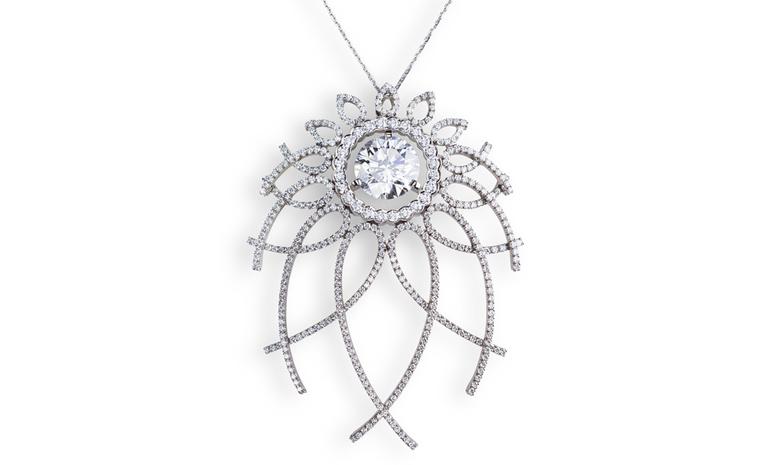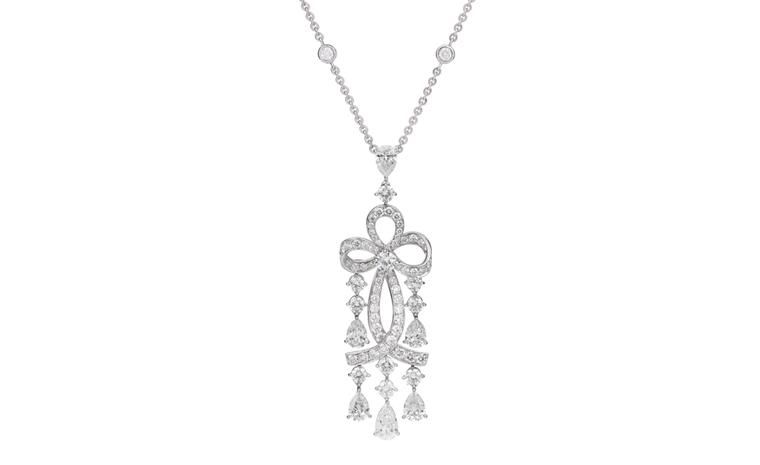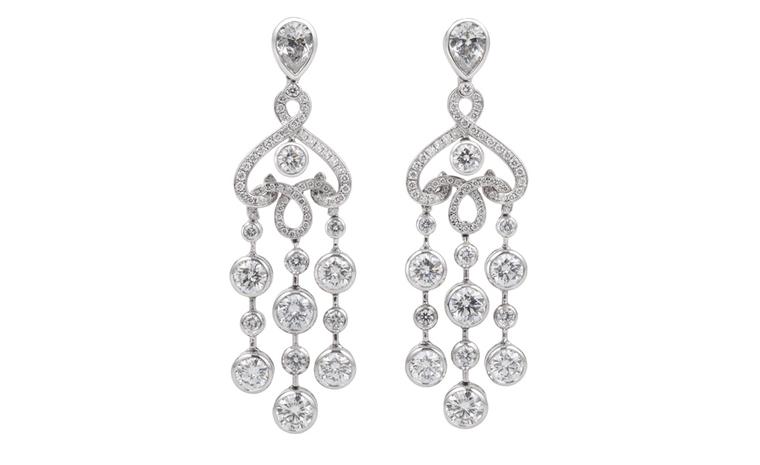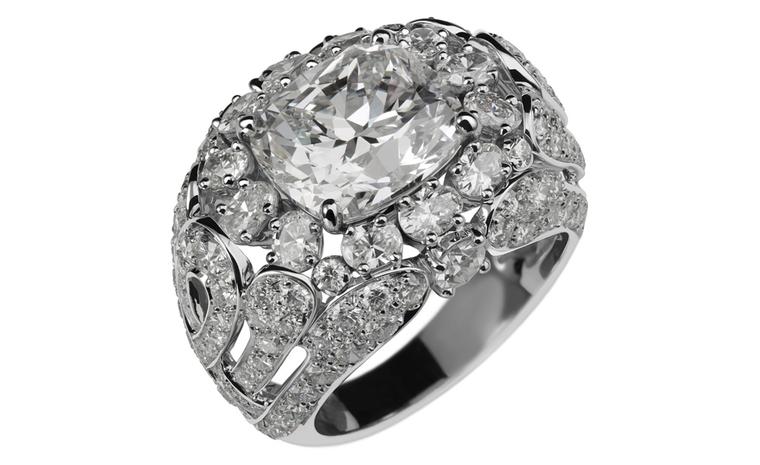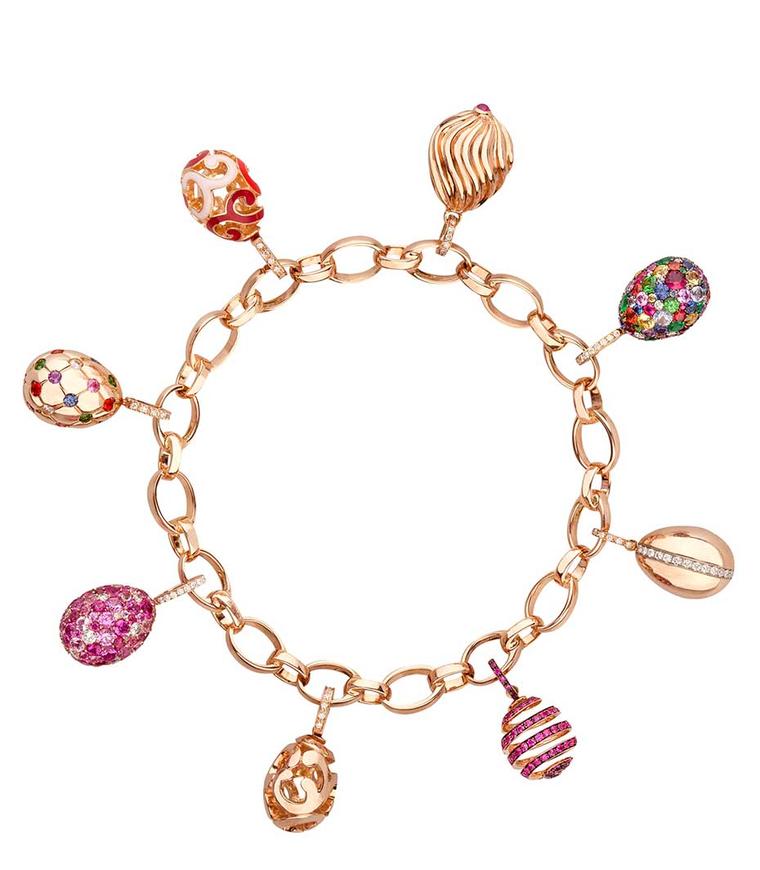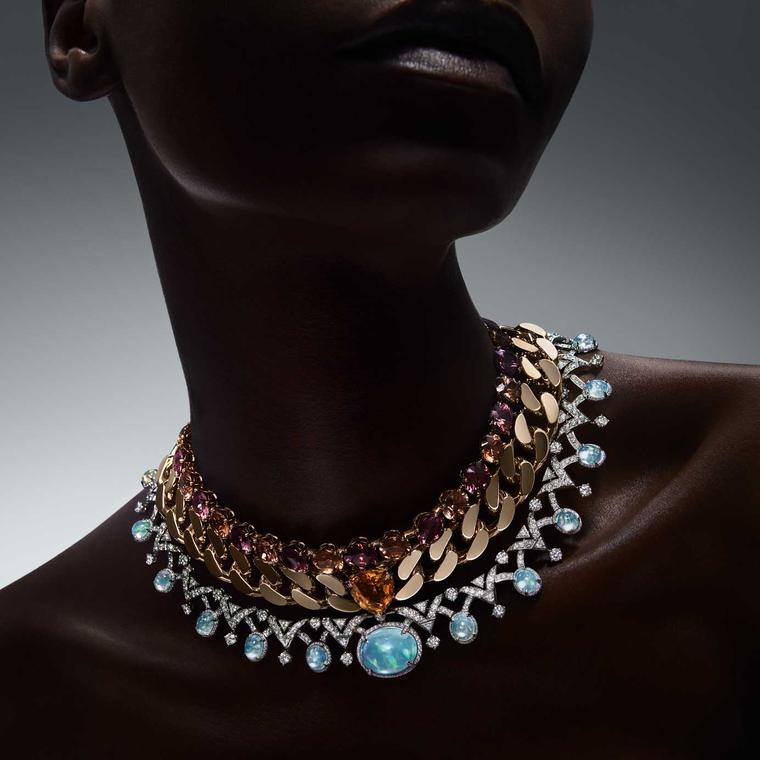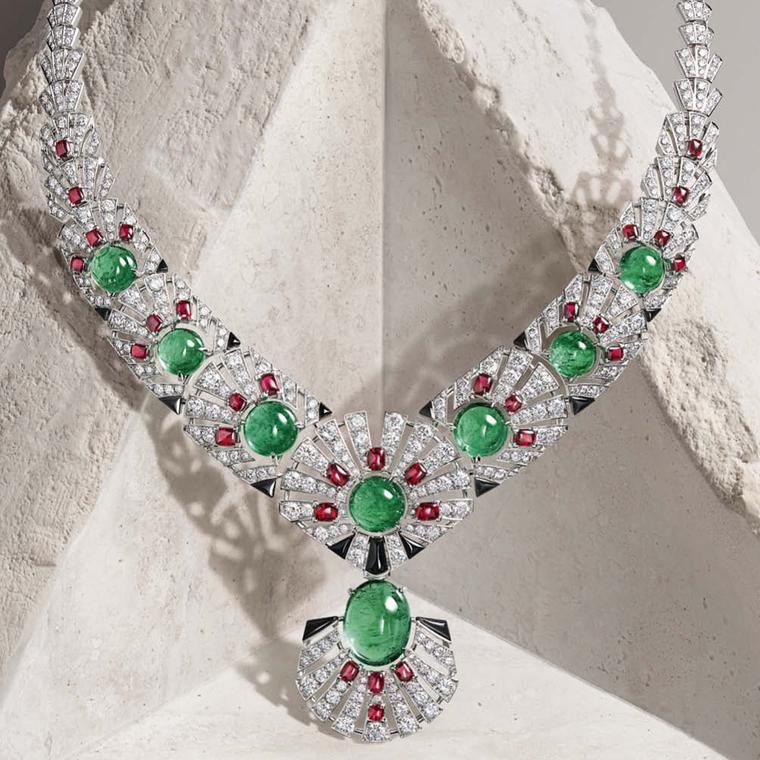
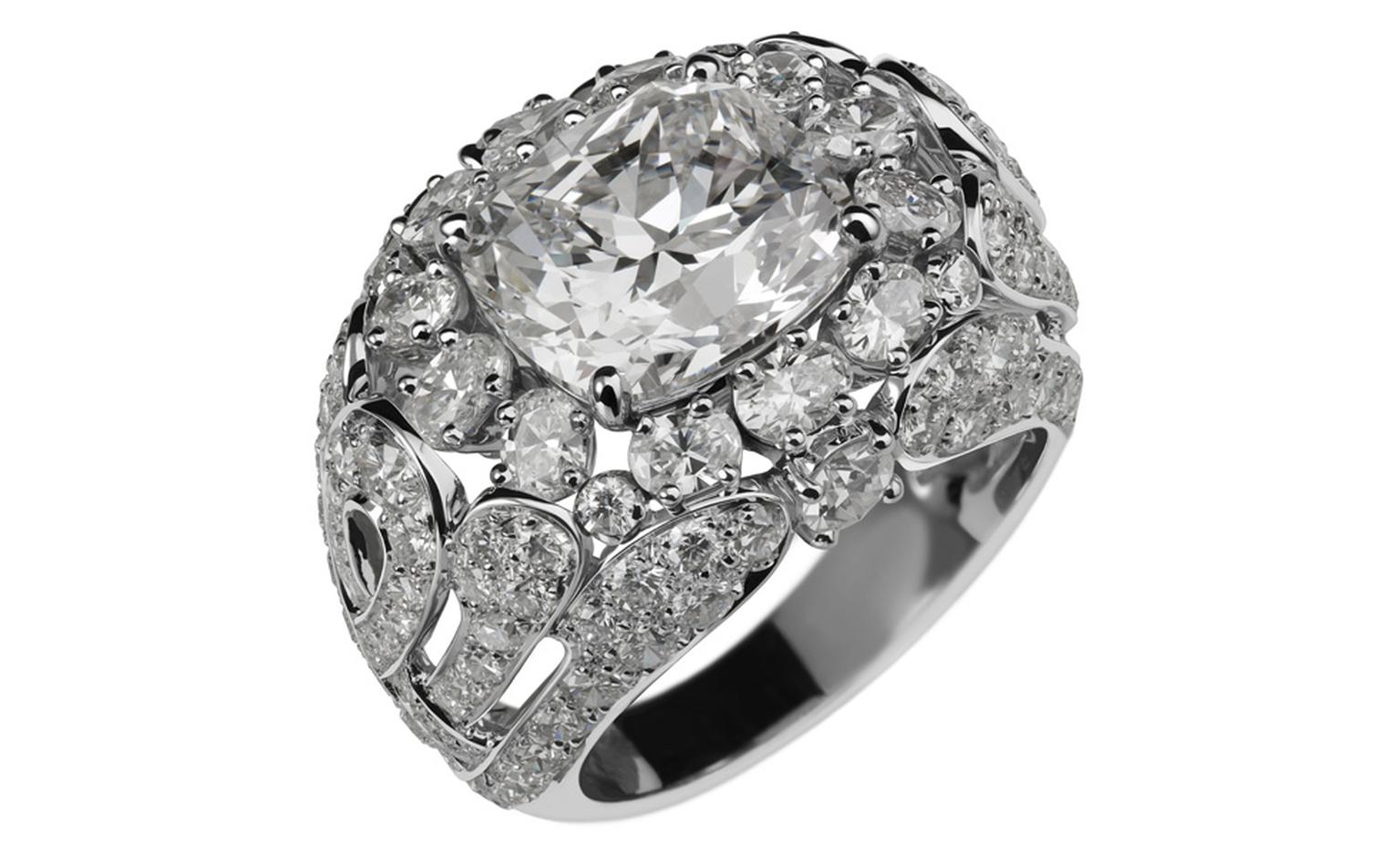
Fabergé's new diamond jewellery collection called 'Carnet de Bal' or dance card captures the elegance and style of Imperial Russia's magnificent parties. The sound of swirling mazurkas, the sparkle of chandeliers, the thick white of damask-clad banqueting tables and flutter of white ball gowns are captured in this new diamond collection. Since the house of Fabergé's rebirth two years ago, this is the first all diamond collection to be launched by the brand intrinsically linked to Russia and the opulence of the Romanov dynasty . The banquets, balls and soirées of St Petersburg at the start of the 20th century inspire the collection and in particular the Carnet de Bal or dance card that was central to the formalities of dance partner etiquette. Family heirlooms were brought out for these special festivities and diamonds sparkled on the skin and were embroidered onto the gowns. At the height of Romanov Russia, the party season was divided between the January Ball Season when chandeliers blazed through windows across the snow-blanketed city and the White Nights of June illuminated by the midnight sun. The colour white dominated these balls with the ladies wearing obligatory all-white gowns and soft drifts of silk and lace, thick white silk damask was draped over banqueting tables, chandeliers blazed bright and all scented by exotic flowers woven into trellises. Exquisite details of the parties are remembered in the collection and each jewel is a one-off design. The 'Eventail' ring recalls the flutter of a fan, the 'Mazurka' cuff evokes the swirl of dancers while the 'Trelliage" pendant reminds us of the Peter Carl Fabergé 1892 Diamond Trellis Imperial Easter egg. The house of Fabergé is perhaps one of the most romantic names in the world of jewellery. The house had not made any high jewellery for 90 years until in January 2007, Pallinghurst Resources, a UK registered, South-African based natural resources investment company, bought from Unilever the Fabergé trademarks, licenses and associated rights. Fabergé's history is linked to Russia and the final days of the rule of the Romanov family. Gustav Fabergé, a Huguenot descendant whose family fled France to settle in Estonia, trained as goldsmith in St Petersburg and in 1842 opened his first shop in this city. It was Gustav's son, Peter Carl Fabergé who was commissioned as a goldsmith to the Imperial Crown under Tsar Alexander III and created the famous Easter eggs and magnificent jewels for the Romanovs for which the house became famous. At the outbreak of the Great War in 1914 Fabergé workshops produced syringes and even grenades for the military. In 1918 the House of Fabergé was nationalised the family fled the country. In 1937 Sam Rubin, an American of Russian descent, started a perfume company and called it Fabergé Inc without the family's permission. In 1989 it was sold to Unilever and for more than 90 years no high jewellery has been created under the Fabergé name. Fabergé has only one shop that is in Geneva and sells its jewels online. Clients are given a code to access the website's inner sanctum where staff based in Geneva will be available on line, on the phone, via webcam 24 hours a day or in person and offering 12 different languages.